October's 'Hunter's Moon' reaches full illumination tonight
The October full moon reaches 100% illumination at 12:12 a.m. EDT on October 26, visible in the eastern sky at sunset on October 25.
What happened
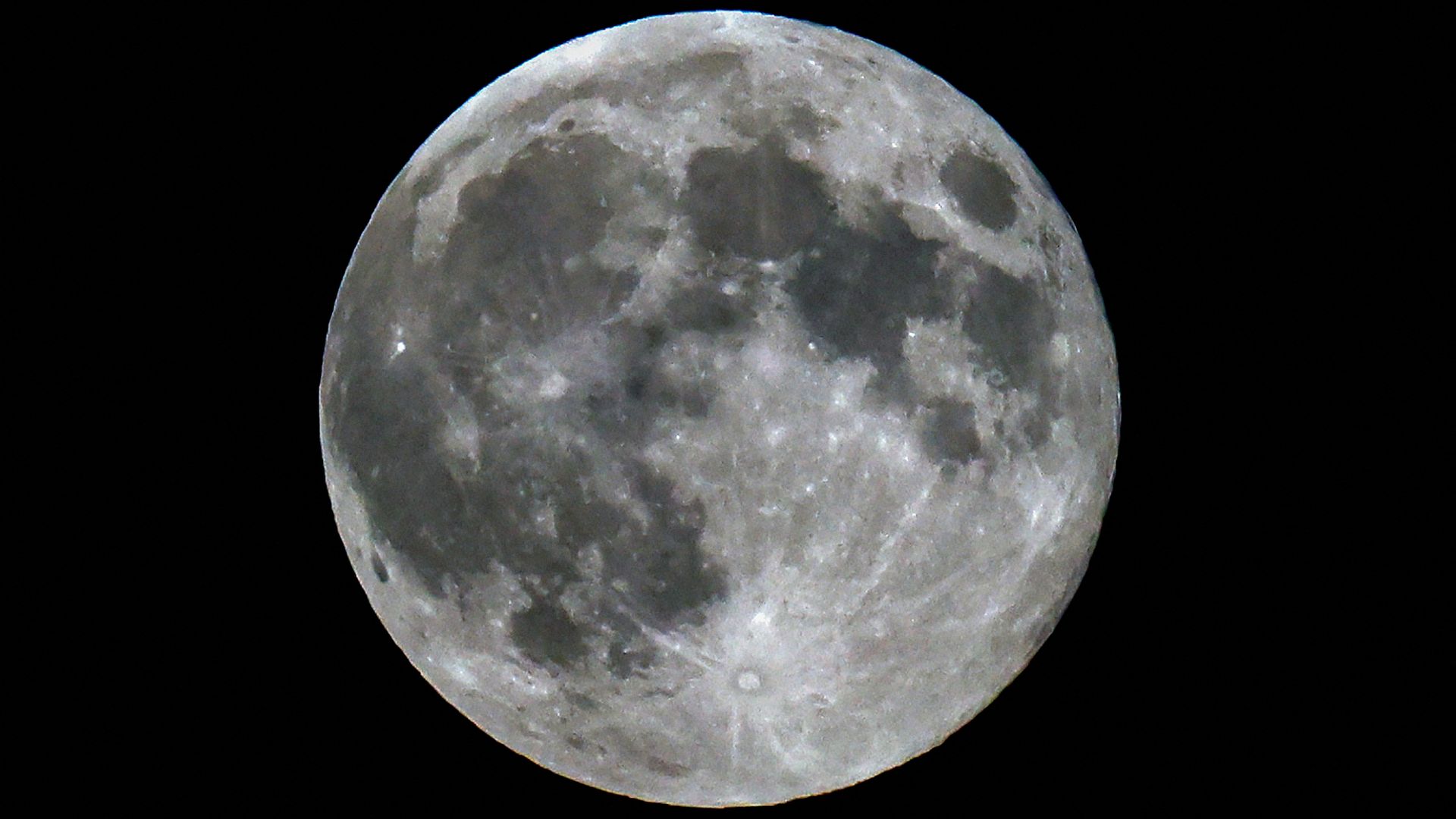
October's full moon reaches complete illumination at 12:12 a.m. EDT on October 26, when the lunar disk shines directly opposite the sun in Earth's sky. The moon will be visible to stargazers in the U.S. as it rises in the eastern sky at sunset on October 25. At full illumination, the moon displays its dark basaltic plains or 'seas' and reflective streaks from bright young craters without the shadows that appear during waxing and waning phases.
Context
The October full moon is known as the 'Hunter's Moon' in the Northern Hemisphere because it rises soon after farmers have cleared away the summer's harvest, leaving fields bare for hunters to catch their prey and prepare it as food for winter. Other Indigenous names reflect the season's characteristics: the North American Cree call it the 'Migrating Moon' for bird migration timing, while the Ojibwe and Haida call it the 'Freezing Moon' for autumn temperature drops. The moon often appears larger near the horizon due to the 'Moon Effect,' a perceptual phenomenon where proximity to the ground makes the lunar disk appear larger than when overhead. Shortly after moonrise, the moon typically takes on a yellow-orange color as blue wavelengths scatter during its passage through Earth's atmosphere.