Archaeologists uncover 1,500-year-old elite toddler burial from pre-Inca Moche culture in Peru
A lavishly furnished tomb containing an elite child no older than 2 years old challenges existing understanding of Moche funerary practices.
What happened
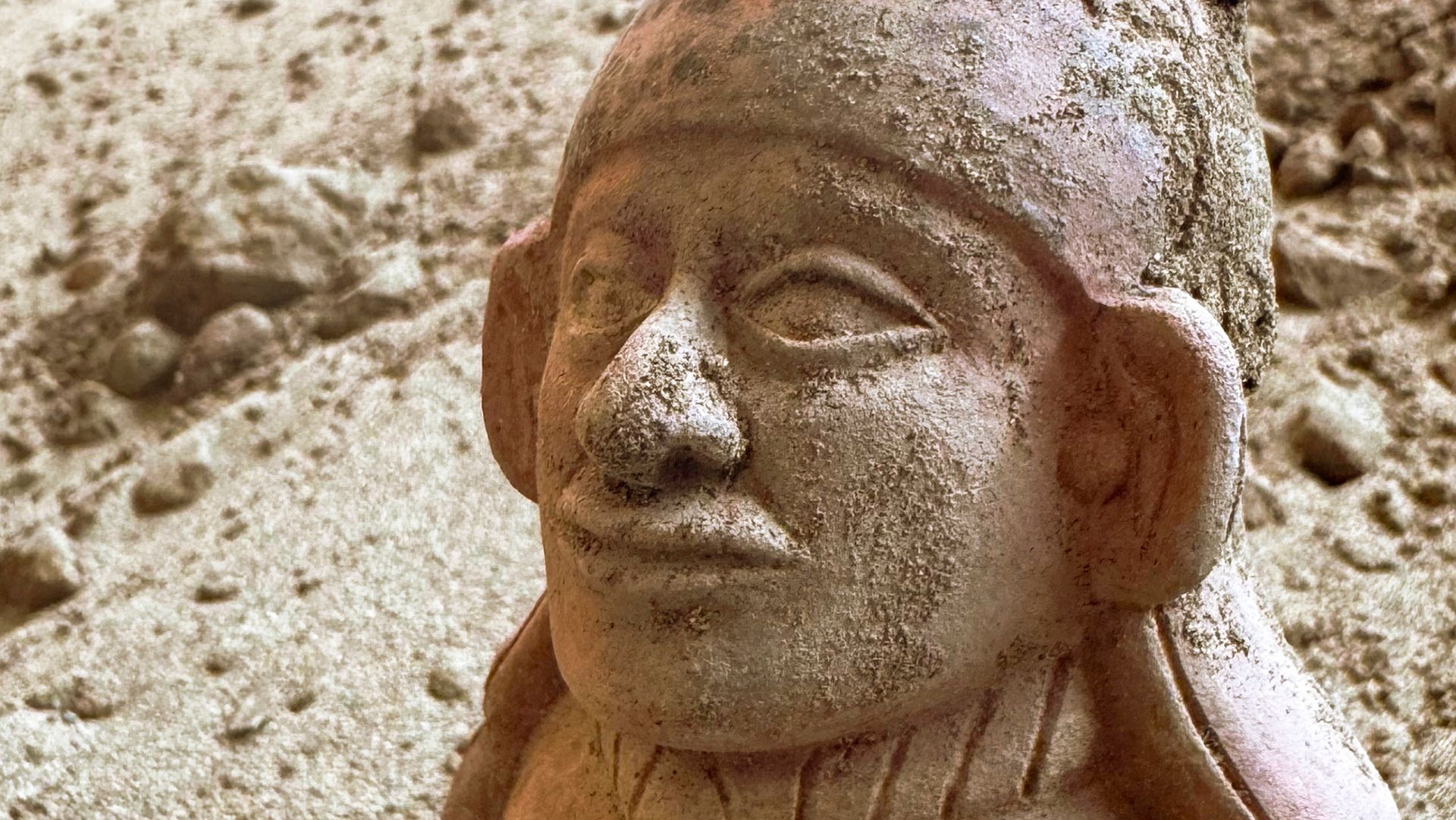
Archaeologists working at the Huacas de Moche archaeological site in northern Peru discovered a 1,500-year-old tomb dating to the sixth or seventh century containing the remains of a high-status toddler, at most 2 years old, whose sex is unknown. The burial, attributed to the Moche culture that flourished from the third to ninth century, contained 32 ceramic objects including two vessels depicting prisoners with ropes around their necks and a sculpture of a human-bird deity, as well as two copper objects—a mask-like disk covering the child's face and a half-moon object at the feet. The tomb was unusually large for the child's size and was found inside the Uhle Platform, a mausoleum attached to the Huaca de la Luna temple at the site. Of more than 80 burials previously uncovered at this location, this is the only known child burial with such lavish treatment.
Context
The elaborate funerary treatment, location, and copper objects indicate the child belonged to an elite class of Moche society. The presence of prisoner-depicting vessels is notably unusual in a child's burial, as these typically represent adult rituals of combat and sacrifice—a toddler would not have participated in such activities. This discovery expands understanding of Moche burial practices and challenges assumptions about which ritual imagery belonged to which social roles. The deity sculpture may represent a known Moche god or a previously undocumented addition to their pantheon, contributing to an ongoing scholarly debate about whether the Moche pantheon consisted of many gods or few gods capable of multiple transformations.
What's disputed
The identity and interpretation of the depicted deity—whether it represents a known Moche god or a newfound one, and whether it depicts a god in transformation rather than a distinct deity.