Scientists identify seven distinct stages meteorites undergo as they enter Earth's atmosphere
Research on 75 meteorites reveals that melting and fragmentation, not just evaporation, control how space rocks lose mass and velocity during atmospheric entry.
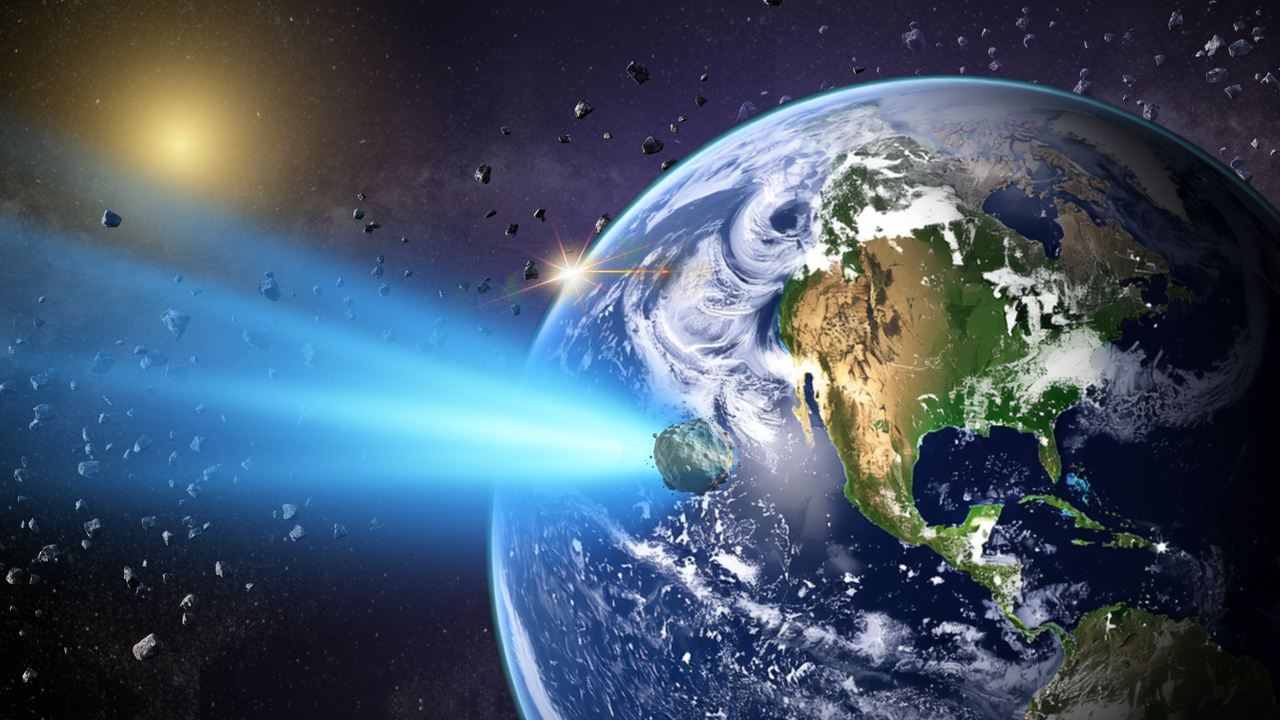
What happened
A team led by Peter Jenniskens of the SETI Institute and NASA Ames Research Center studied 75 meteorites to map the seven phases space rocks experience as they crash through Earth's atmosphere. Phase 1 begins high in the atmosphere when the rock creates a shock wave that turns it into a shooting star; Phase 2 starts in denser air as brightness increases; Phase 3 sees the formation of a fireball with maximum mass loss through melting; Phase 4 occurs around 40 miles altitude at melting equilibrium; Phase 5 marks fragmentation beginning; Phase 6 sees rapid fragmentation and final flaring; Phase 7 occurs when remaining fragments slow enough to stop glowing. The research found that rocks can lose up to 40% of their original mass by Phase 4, and that fragmentation often occurs earlier than previously expected due to pre-existing cracks from space collisions.
Context
The findings challenge the previous understanding that evaporation alone determined mass loss during atmospheric entry. The research shows that meteorites successfully reaching Earth's surface undergo more melting and fragmentation, which slows them enough to land, with winds then carrying fragments and determining final landing locations. Understanding these processes has practical implications for assessing larger hazards: the team notes that the 20-meter Chelyabinsk asteroid that caused an airburst over Russia in 2013 went through these same seven phases, suggesting the framework could help predict behavior of potentially dangerous asteroids ranging from tens of meters to city-block size.