Nonprofit announces plan to launch first directed interstellar probe to Alpha Centauri by 2029
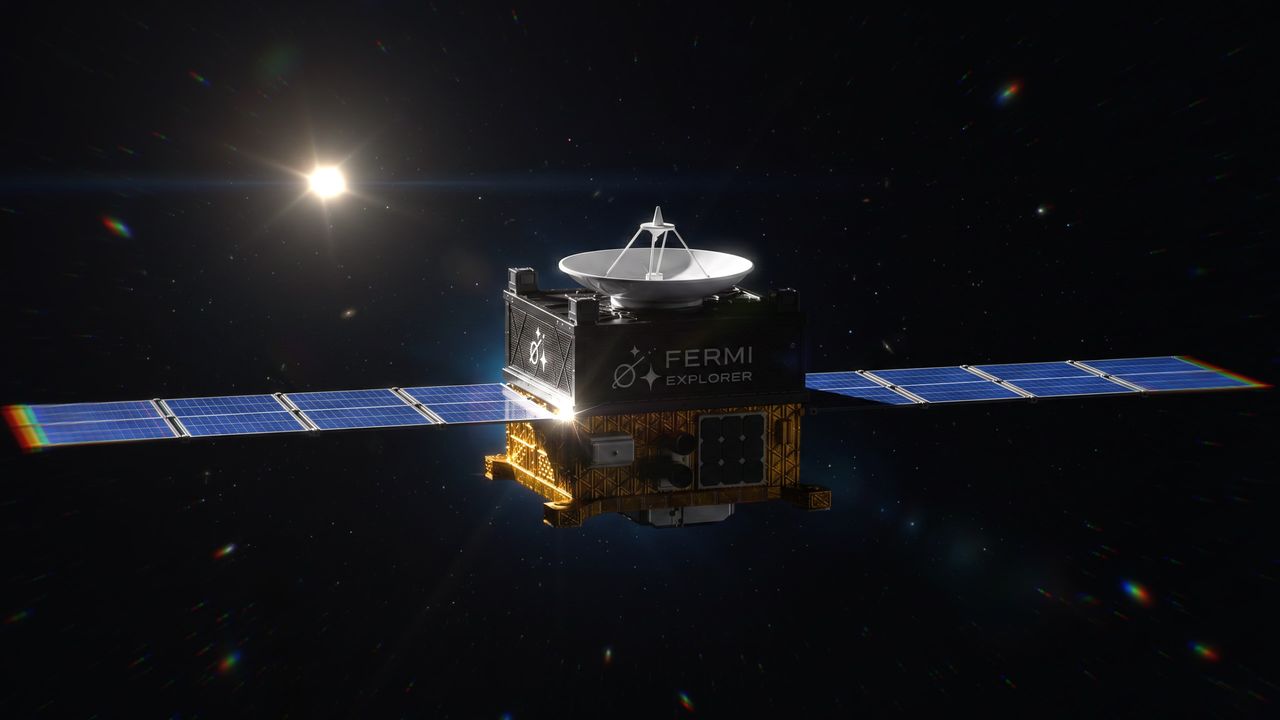
The Fermi Explorer Mission says it will send a small spacecraft toward the nearest star system on an 80,000-year journey using proven electric propulsion technology.
What happened
The Fermi Explorer Mission, a 501(c)(3) nonprofit founded by Starcloud co-founders Philip Johnston, Ezra Feilden, and Adi Oldean, announced on September 1 that it plans to launch a spacecraft toward Alpha Centauri—the sun's nearest stellar neighbor at 4.4 light-years away—by 2029. Though NASA's Voyager 1 and Voyager 2 spacecraft are in interstellar space, they are not headed toward any particular star; rather, they are journeying outward on the path they took to complete their grand tour of Jupiter, Saturn, Uranus and Neptune. The Fermi Explorer Mission will pursue a directed trajectory toward a specific star, which will be a first. The planned spacecraft will weigh 220 to 440 pounds, carry at least 2.2 pounds of payload, employ electric propulsion (a proven technology), and cost less than $15 million. Journey time is estimated at 80,000 years. The team includes former Blue Origin president Rob Meyerson and AstroForge CEO Matt Gialich as advisors, and says it already has a spacecraft proposal from a major satellite manufacturer within budget.
Context
This would represent the first deliberate human attempt to reach another star, though the probe will not arrive during any foreseeable human timescale. The mission is framed as addressing the Fermi Paradox—physicist Enrico Fermi's 1950 question 'Where is everybody?'—by demonstrating that interstellar travel is resource-achievable for intelligent species and that at least one species (humanity) will attempt it. This has implications for how we contextualize the apparent absence of detectable extraterrestrial civilizations: the mission's success would narrow the possible explanations for the paradox by providing evidence that leaving one's star system is technically feasible without prohibitive resource expenditure. The project employs electric propulsion, which is a proven system, rather than relying on futuristic technology. Other interstellar projects like Breakthrough Starshot have pursued more speculative approaches, seeking to use powerful lasers to accelerate nanoprobes to about 20% the speed of light for a roughly 20-year trip to Proxima Centauri.