Astrophotographer captures Orionid meteors from Halley's Comet debris trail
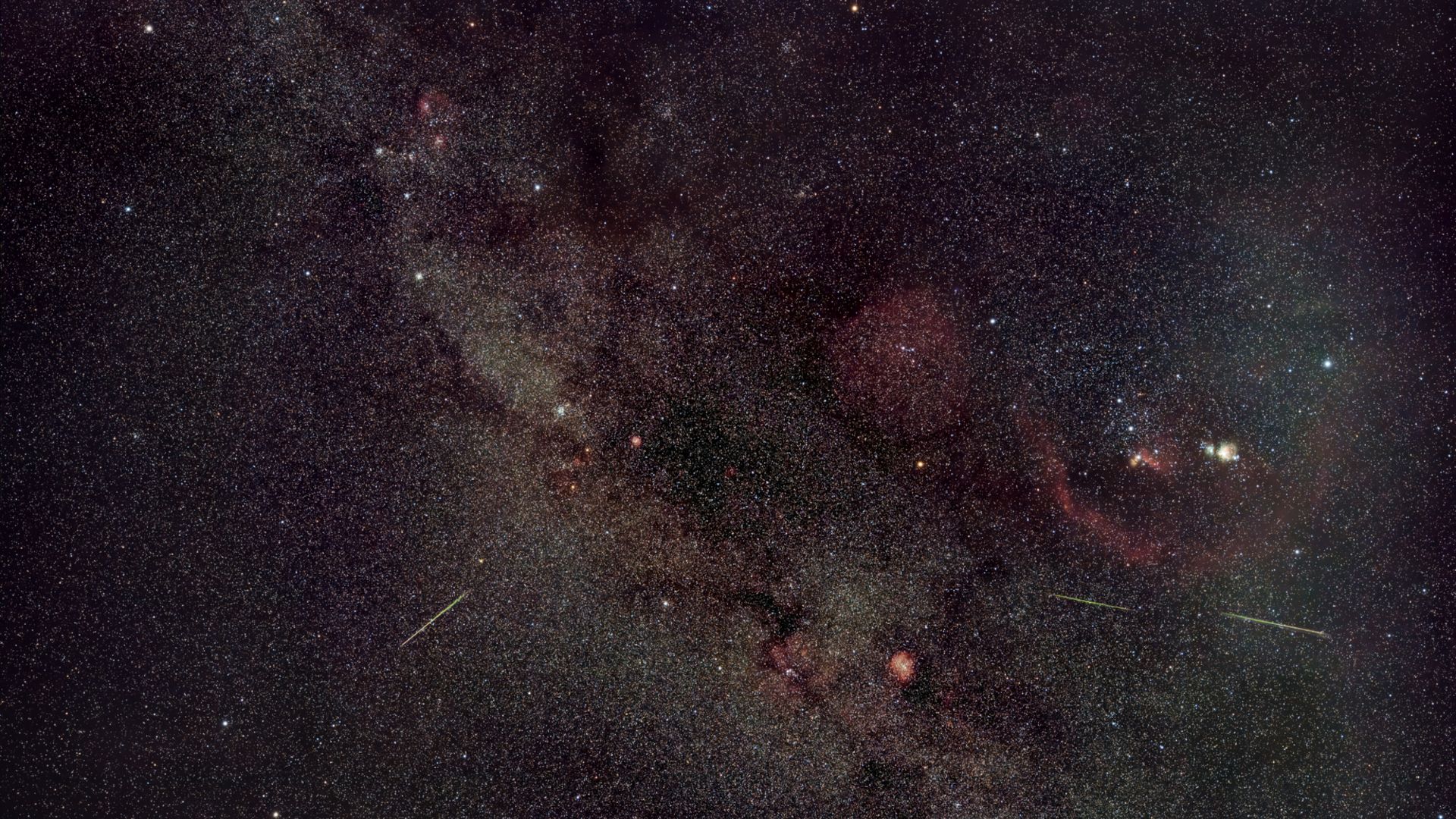
Photographer Tim McCollum documented three vivid Orionid shooting stars over Georgia on Oct. 21, with Halley's Comet positioned over 3 billion miles from Earth.
What happened
Astrophotographer Tim McCollum captured a composite image of three Orionid meteors on Oct. 21 between 3-4 a.m. above Toccoa, Georgia, as Earth passed through debris shed by Halley's Comet. The meteors streaked away from their radiant point near Betelgeuse in the constellation Orion. McCollum used multiple 30-second exposures from a Canon EOS Ra camera with a star tracker and combined them using PixInsight software. The image also shows Orion's Belt, the Orion Nebula, the Rosette Nebula, star clusters, and the Milky Way's galactic plane.
Context
The Orionid meteor shower is an annual event produced when Earth passes through the orbital debris of Halley's Comet, one of the most well-known periodic comets. Though the comet itself remains far from Earth, the particles it has shed continue to create visible meteors during this annual window. The shower is active through Nov. 7, providing multiple opportunities for observation. Capturing meteors requires specific equipment, technique, and fortunate timing, making such composite images notable achievements in astrophotography.