Orionid meteor shower peaks Oct. 21-22 as Earth passes through Halley's Comet debris
The annual Orionid meteor shower will produce around 20 meteors per hour at its peak, with the best viewing in predawn hours before moonrise.
What happened
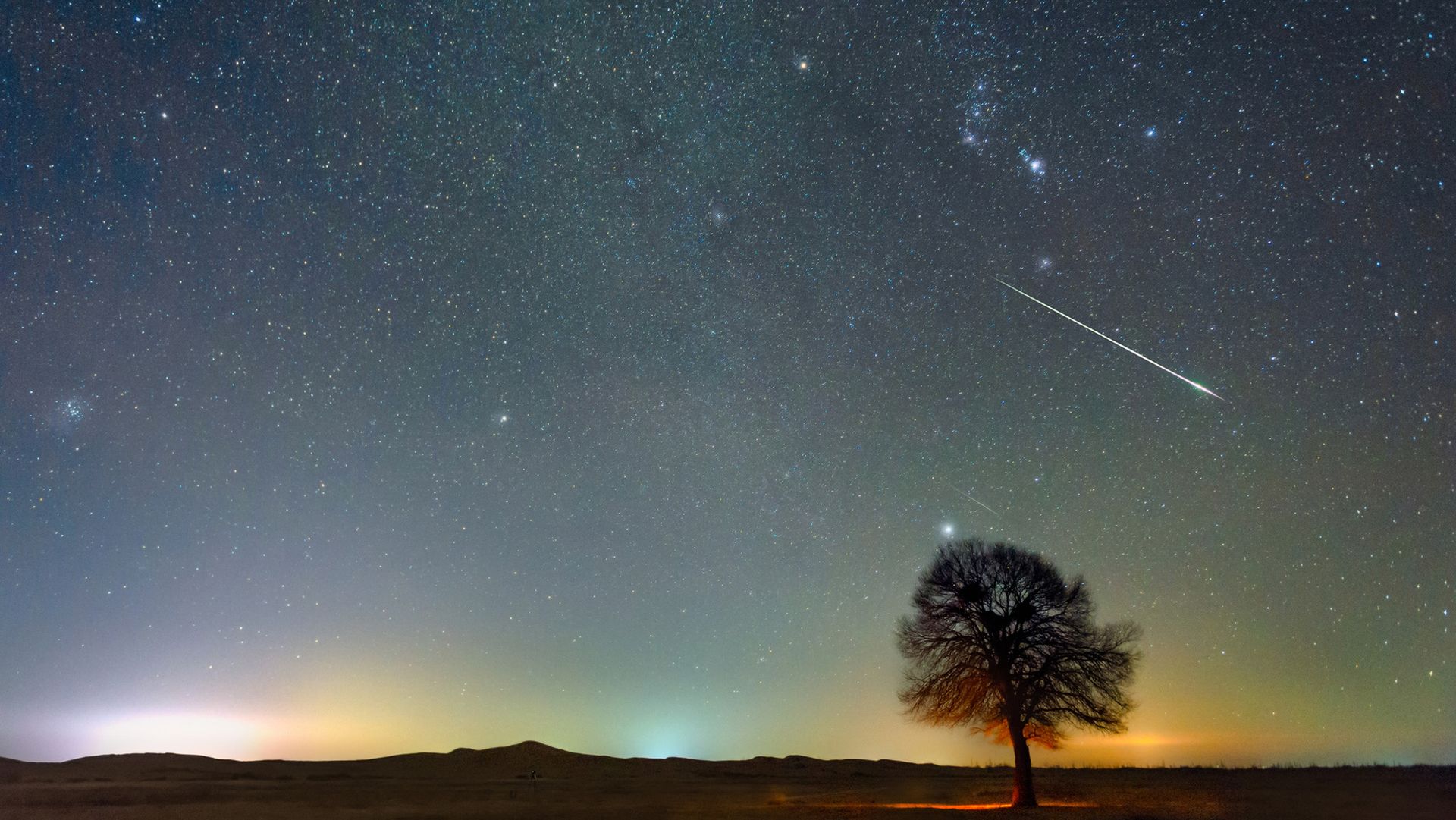
The Orionid meteor shower will peak overnight October 21-22, producing approximately 20 meteors per hour under dark skies. The meteors are debris from Halley's Comet, which last passed through the inner solar system in 1986 and will return in 2061. Earth passes through the comet's debris streams twice yearly—once during the Orionids in late October and again during the Eta Aquariids in early May. The Orionid meteors strike Earth's atmosphere at around 41 miles per second and can produce bright streaks, fireballs, and persistent glowing trails. Viewing conditions are partially compromised this year by a 71%-illuminated waxing gibbous moon, but the moon will set early Thursday morning, providing optimal darkness for predawn observation when the constellation Orion is high in the sky.
Context
Halley's Comet, currently beyond Neptune's orbit, continuously sheds dust and rocky particles along its orbital path due to solar heating. These ancient particles accumulate over centuries, creating debris streams that intersect Earth's orbit at predictable times each year. The Orionids are notable for their speed and brightness, making them one of the better fall meteor showers for observation. Naked-eye viewing is optimal, though binoculars or small telescopes can enhance the experience. The naming convention traces to Betelgeuse, the red supergiant in Orion, which serves as the radiant point from which meteors appear to originate, though viewers need not look directly at the constellation to observe the phenomenon.