Cassini-Huygens Saturn mission ends after 20 years of exploration
NASA's Cassini spacecraft, launched on October 15, 1997, concluded its groundbreaking mission to Saturn with a controlled dive into the planet's atmosphere on September 15, 2017.
What happened
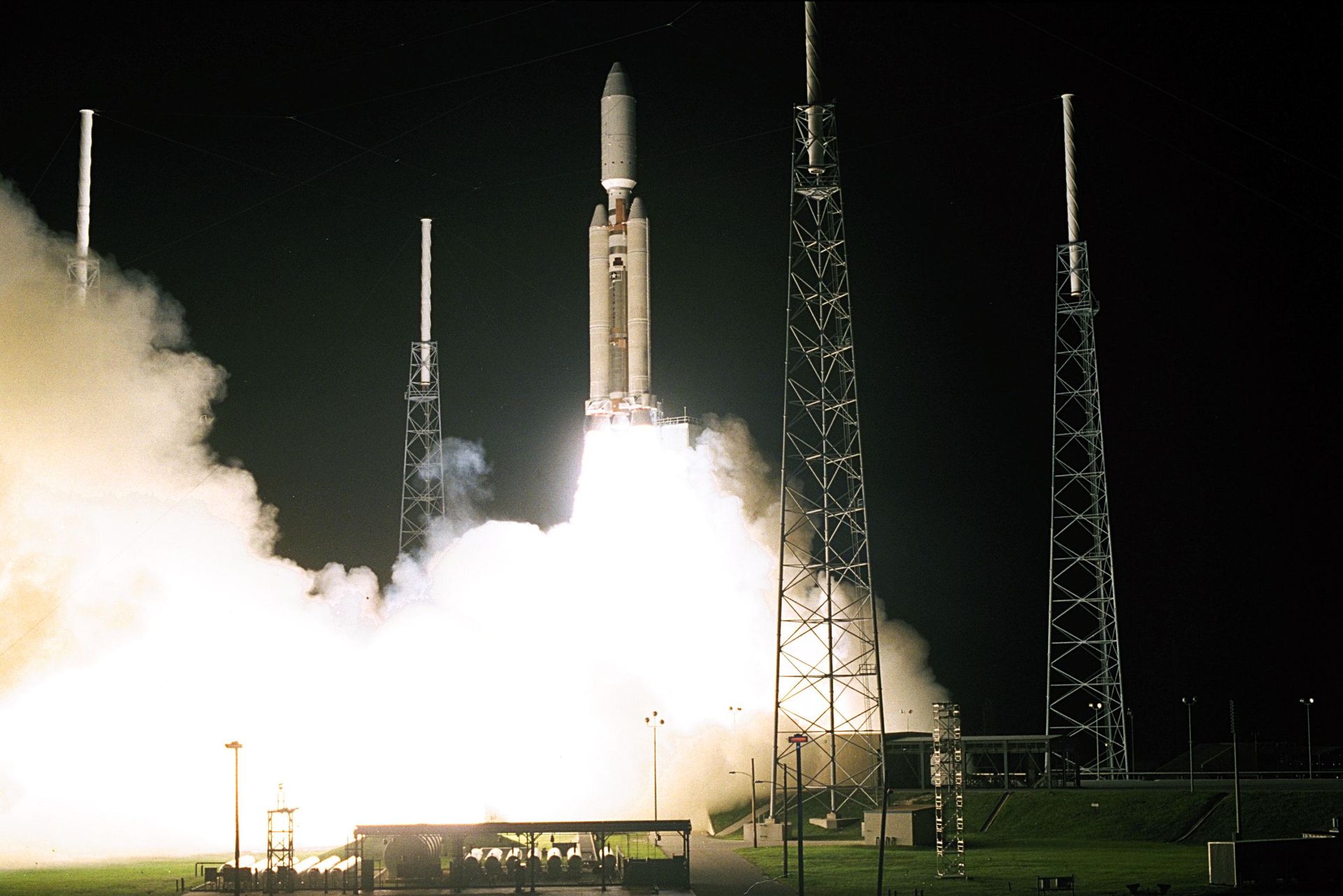
NASA launched the Cassini spacecraft on October 15, 1997, aboard a Titan 4B rocket from Cape Canaveral Air Force Station. After a seven-year journey, Cassini entered orbit around Saturn in 2004, becoming the first probe ever to orbit the ringed planet. The smaller Huygens lander, carried aboard Cassini, landed on Saturn's moon Titan in 2005. The mission lasted approximately 20 years before concluding on September 15, 2017, when NASA deliberately steered the low-fuel Cassini into Saturn's atmosphere where it was destroyed.
Context
The $3.26 billion Cassini-Huygens mission revealed Saturn's rings as active, dynamic structures and discovered a hexagon-shaped jetstream at Saturn's north pole, massive polar vortexes, and a giant storm that grew to encircle the entire planet from 2010 to 2011. Huygens observations indicated Titan's atmosphere supports liquid hydrocarbon rain, rivers, lakes, and seas. Cassini detected water plumes erupting from Saturn's moon Enceladus, providing evidence of a subsurface ocean with hydrothermal activity similar to Earth's deep-sea environments. NASA chose the controlled destruction of Cassini to prevent contamination of Saturn's moons, particularly Enceladus and Titan, which the agency identified as worlds potentially capable of supporting life.