New simulations suggest Earth's moon formed in just 5 hours after giant impact
Researchers including Adeene Denton refined computer models of the ancient collision between Earth and the protoplanet Theia by accounting for temperature-dependent material properties, finding the moon could have coalesced almost instantly rather than gradually.
What happened
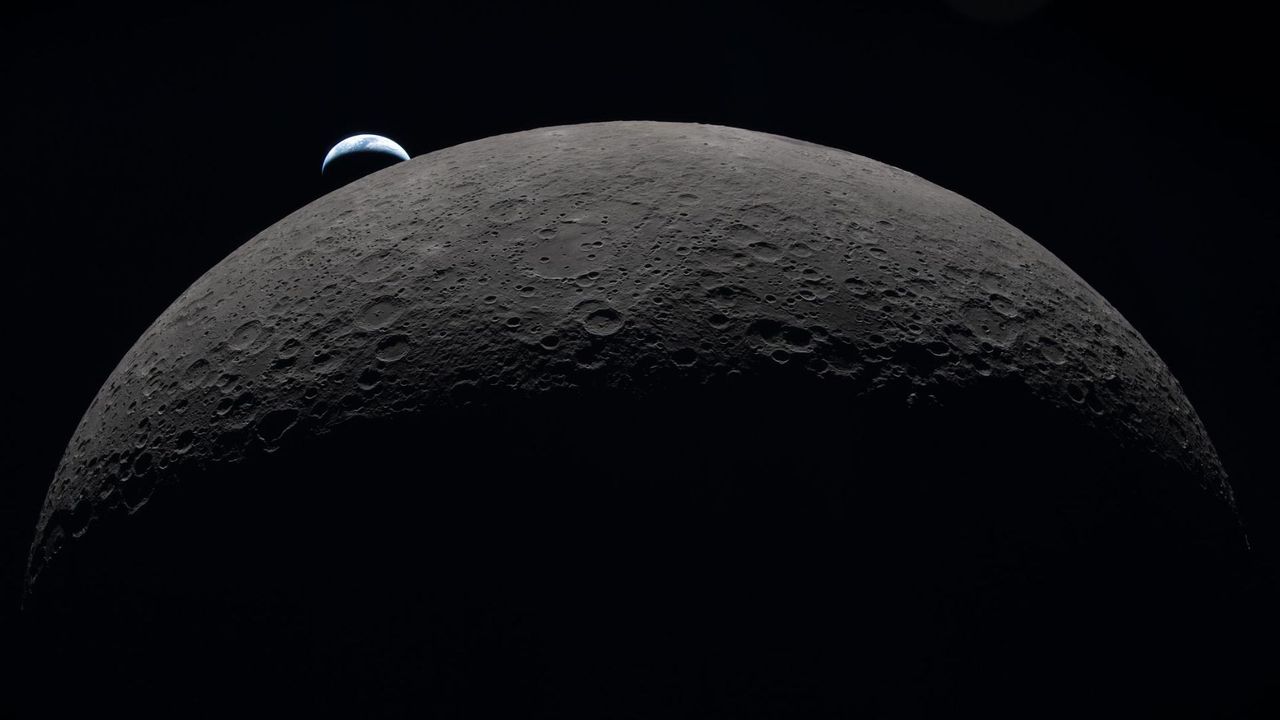
Denton's team at the Southwest Research Institute conducted detailed simulations of the moon-forming giant impact, incorporating material strength properties that vary with temperature—a factor previous models often omitted. The simulations show that if Theia was warm (impacting Earth less than 60 million years after planetary formation), the collision would obliterate Theia and create a massive debris disk from which the moon could accrete in approximately five hours. Conversely, if Theia was cooler (impacting 100-150 million years after formation), the debris disk would have allowed gradual moon accretion over a longer timescale. The findings were published September 1 in The Astrophysical Journal Letters and support a scenario first depicted in NASA-led simulations in 2022.
Context
The giant impact hypothesis has been the leading theory of lunar formation since work by Robin Canup beginning in 2001. The new models constrain the moon's formation timeline and composition based on thermal conditions at the time of impact, potentially helping scientists narrow down when the moon-forming event actually occurred. If the moon formed in hours rather than gradually, this would have implications for exomoon searches around terrestrial exoplanets, where short-lived debris disks would be difficult to detect. However, existing isotopic differences between the moon and Earth's mantle remain unexplained by current simulations, including these new ones, indicating gaps in current understanding.
What's disputed
The exact timing of the giant impact and the precise thermal state of Earth and Theia at that time remain uncertain, as do explanations for specific isotopic differences between the moon and Earth's mantle composition.