Researchers develop model to read supernova history encoded in lunar regolith
A new mathematical model can disentangle radioactive supernova debris from lunar soil, potentially revealing 80–100 million years of stellar explosion history.
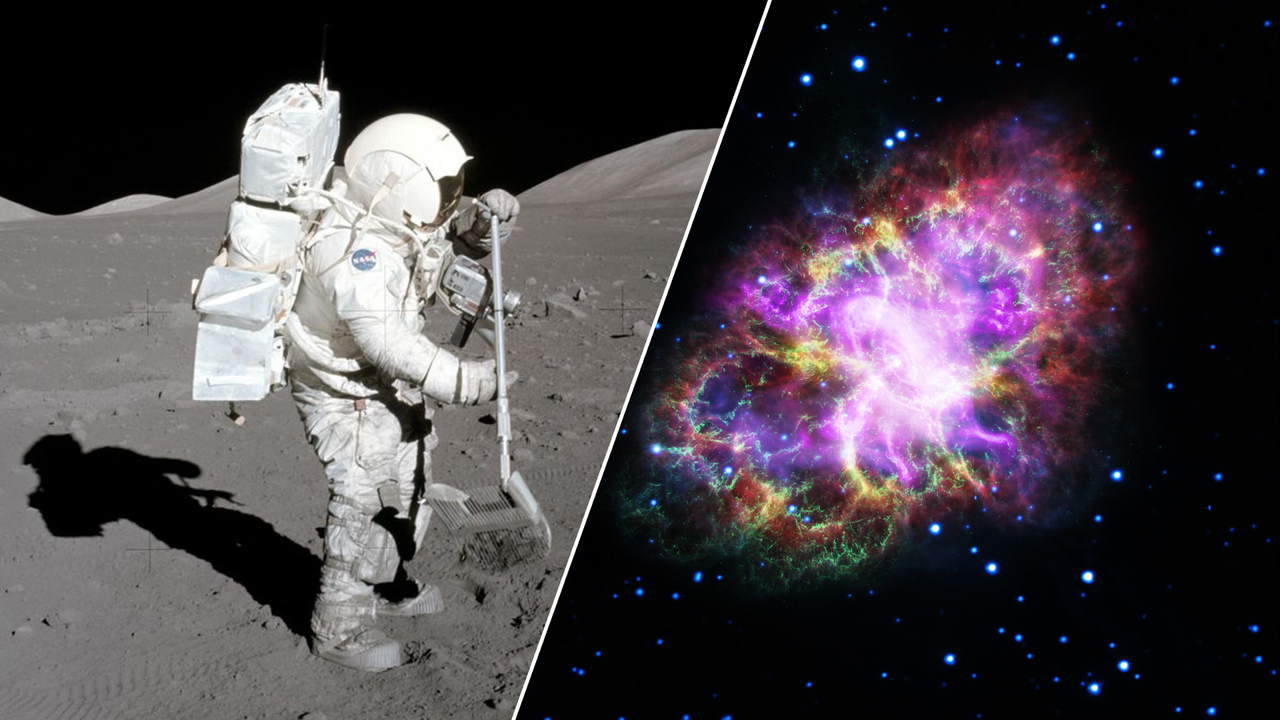
What happened
Planetary scientist Emily Costello's team at the University of Hawaii developed a computer model that accounts for impact gardening on the moon—the process by which micrometeorites and asteroids churn and mix the lunar regolith over time. The model tracks how radioactive isotopes from supernovae get buried and redistributed in lunar soil while accounting for radioactive decay and space weathering. The team validated the model by comparing its predictions to depth-concentration profiles of elements like iron-60, plutonium-244, iodine-129, hafnium-182, and curium-247 found in Apollo lunar samples and Earth's deep-sea sediments. The results showed remarkable agreement between the model's predictions and empirical observations. The findings were published in Physical Review Letters on August 14.
Context
Supernova explosions scatter radioactive debris throughout the solar system, and traces of this material accumulate on planetary bodies. Earth's geological records of supernova activity only extend back about 10 million years because erosion, rainfall, and plate tectonics destroy the evidence. The moon, lacking atmosphere and plate tectonics, potentially preserves a record spanning 80–100 million years or longer. Two peaks in supernova activity have been identified at 2.3 and 7.3 million years ago based on current samples. The model enables scientists to decode this history from scrambled lunar regolith, and future Artemis missions bringing back deeper lunar samples could reveal new insights into supernova history.