NASA satellite captures extensive open water near North Pole, revealing fragility of Arctic sea ice
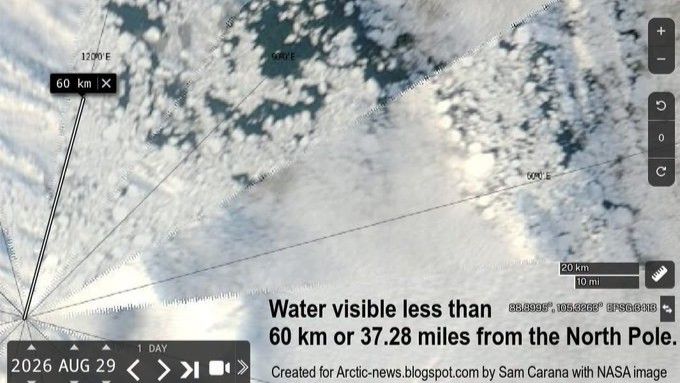
A NASA image from August 29 shows open water patches within 37 miles of the North Pole, illustrating how climate change is making Arctic ice thinner and more fractured.
What happened
A NASA Worldview satellite image captured on August 29 shows large patches of open water located approximately 37 miles (60 kilometers) from the North Pole. According to Julienne Stroeve, a polar observation professor at University College London, while open water has appeared near the North Pole before, the current extent visible in the image has not been documented previously. Climate scientist Zachary Labe notes that such fragmentation is typical by late summer due to local weather conditions and ocean currents, though individual satellite images from the past two weeks show dramatic changes in the location and amount of visible open water near the North Pole.
Context
The Arctic is warming nearly four times faster than the global average, and summer sea ice has become progressively thinner and more brittle in recent years, allowing open water to reach closer to the North Pole than historically observed. While the current extent of Arctic sea ice is not at record lows compared to recent years, the diffuseness of the ice means conditions remain highly variable and subject to rapid change from winds and currents. Broader implications of increased open water across the Arctic include changes to local weather and ocean conditions, impacts on marine ecosystems, and greater coastal risks such as erosion and flooding for Arctic communities. Some of the northernmost regions that once had expansive, thick, and persistent ice at the end of summer now show young, brittle ice floes instead.
What's disputed
Whether this particular satellite image represents conditions dramatically worse than other recent years remains contested; Labe characterizes it as a worrying snapshot of long-term change rather than a spike in deterioration for 2024 specifically. There is no established baseline distance from the North Pole at which open water should normally appear, as Arctic conditions vary substantially year to year.