How Romans Built and Maintained Long-Lasting Aqueducts
Ancient Roman aqueducts, some spanning hundreds of miles, relied on precise surveying, specialized concrete, careful route selection, and sustained maintenance to deliver water across vast distances.
What happened
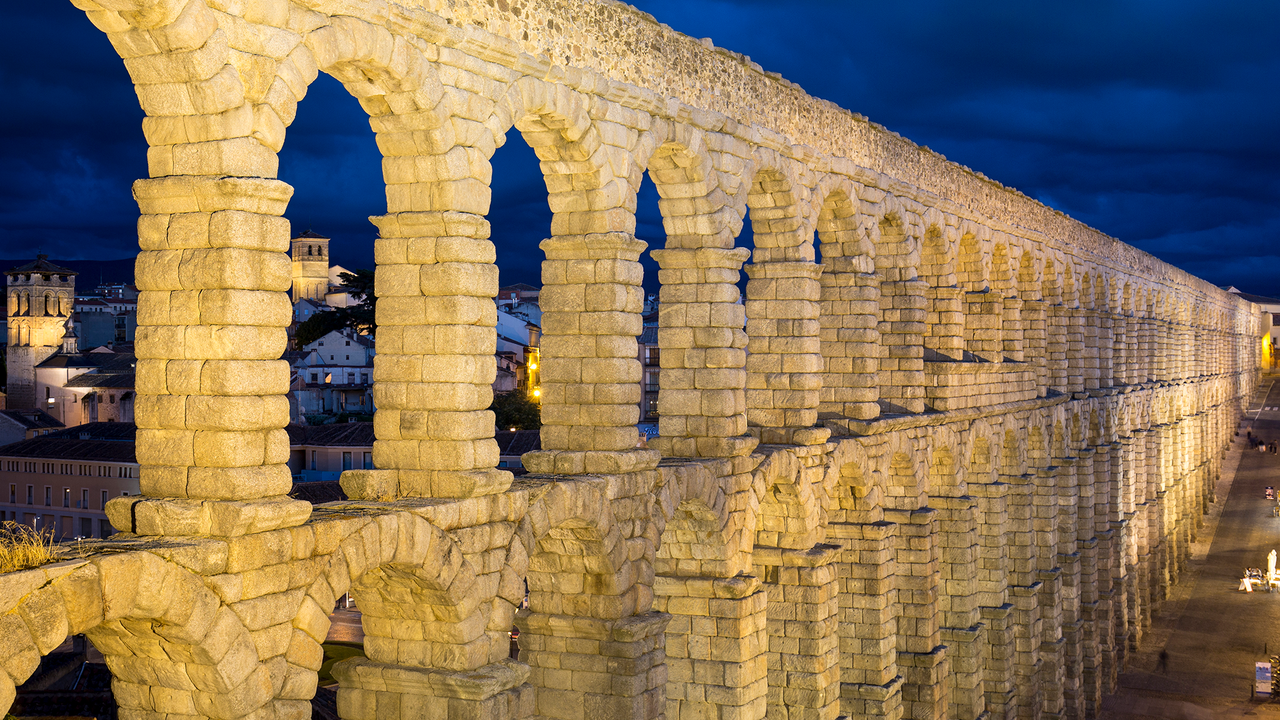
Roman aqueducts were constructed using a multi-step process beginning with careful route selection and surveying. Roman surveyors used instruments like the dioptra (a disc-shaped device with a sighting bar) and the libra (which used a suspended plumb bob) to determine elevation differences and ensure a slight downward gradient from water source to destination. The Romans built these structures using pozzolan-based concrete—an ashy substance mixed with lime and water that hardened when exposed to water—which proved far more durable than modern concrete. Some aqueducts ran entirely or partially underground depending on terrain, while others used arches for considerable distances. The Hadrianic aqueduct at Athens (12.4 miles long) could have been completed in 15 years by approximately 500 workers. After construction, ongoing maintenance was essential: workers scraped away carbonate buildup and replastered sections, with maintenance workforces ranging from a dozen people for smaller settlements like Divona to several hundred in Rome.
Context
The durability of Roman aqueducts resulted from multiple factors beyond concrete quality: surveyors deliberately selected routes following stable geological formations to avoid unstable landscapes like volcanoes, and many aqueducts incorporated sediment-catching basins near cities to filter water. Regular maintenance, in many cases continuing into the Middle Ages and beyond, was crucial to their longevity. The aqueduct of Valens serving Constantinople extended 250 miles, demonstrating the scale of Roman engineering ambition. Some aqueducts remain functional today—the Aqua Virgo, built in 19 B.C., still supplies water to Rome—illustrating how Roman construction and maintenance practices created infrastructure that has outlasted the empire itself.