Archaeologists uncover oldest Western Hemisphere dwelling at 13,800-year-old Alaska site
A base camp in interior Alaska has yielded evidence of the earliest known dwelling structure, bone needles, and possible domesticated dogs in the Americas, along with artifacts suggesting cultural connections across Beringia.
What happened
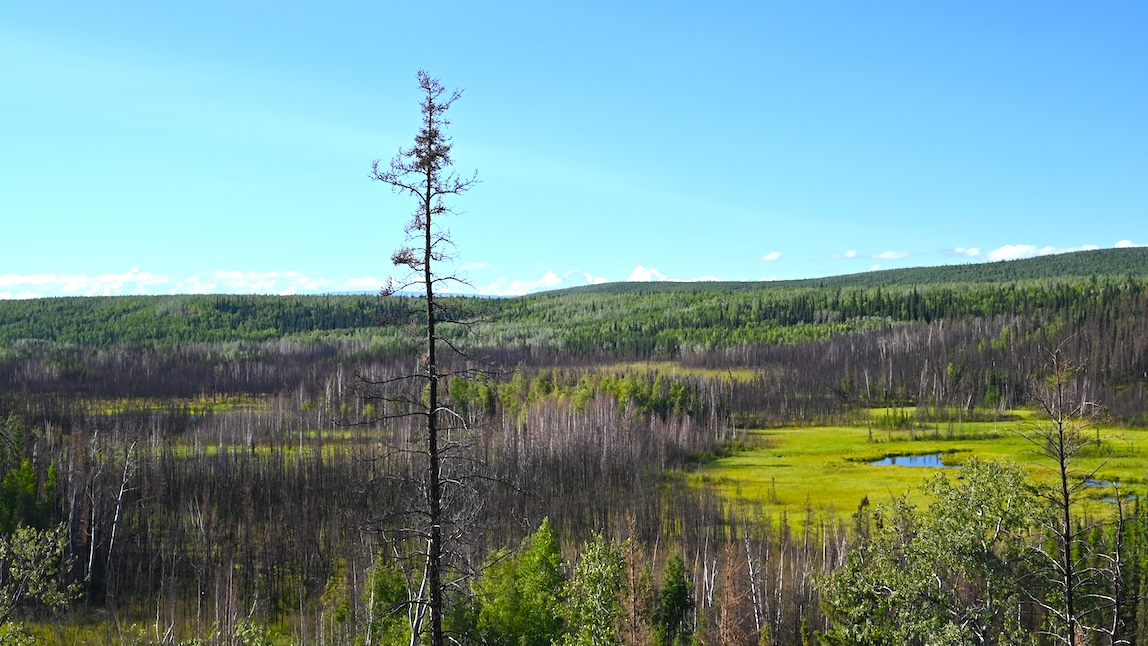
Archaeologists at a site called Shégˊ Xdaltthˊíˊ, located 34 miles southeast of Fairbanks in interior Alaska, excavated a 13,800-year-old encampment and discovered tens of thousands of artifacts including the remains of what may be the earliest dwelling in the Western Hemisphere—consisting of a hearth, pit, and post hole likely from a lean-to or early tent structure. The team also found eight bone needle fragments (the oldest needles ever discovered in the Western Hemisphere), a bone pendant made from antler, stone tools, and bones from more than a dozen wolf-like animals. The stone tools are distinctively shaped and similar to those found in Siberia, while obsidian recovered at the site came from sources hundreds of miles to the northwest. The findings, published in Science Advances on October 14, suggest the site served as a base camp used intermittently over roughly a millennium by some of the first North American settlers.
Context
The discovery challenges the understanding of early human settlement patterns in the Americas. Previous Beringian sites have primarily yielded remains of small seasonal hunting camps scattered across wide areas, leaving much unknown about the earliest inhabitants. This base camp shows evidence of more established occupation and resource use—including an earth oven for slow-cooking meat for family groups—suggesting 'settling in' rather than transient passage. The artifact assemblage reveals unexpected cultural connections: stone tools and wolf bones point to links with Asia, while bone needles reveal connections with sites farther south in temperate North America, indicating cultural links between early Beringians and Americans. These connections occur at a single site, which researchers describe as 'truly notable.' The timing and location of the site in eastern Beringia, the land bridge region between Asia and North America, positions it as potentially key evidence for understanding how the Americas were peopled, particularly given that recent genetic and archaeological studies suggest ancestral entry around 21,000 years ago.
What's disputed
Whether the people at this site traveled back and forth across regions or remained settled is unclear; researchers note it would be difficult to determine from available evidence whether individuals moved during their lifetimes, though connections between sites are confirmed.