New Study Refines Giant-Impact Theory of Moon's Formation, but Key Uncertainties Remain
Research by Adeene Denton and colleagues suggests the temperature and physical properties of colliding bodies may have played a larger role in moon formation than previously understood.
What happened
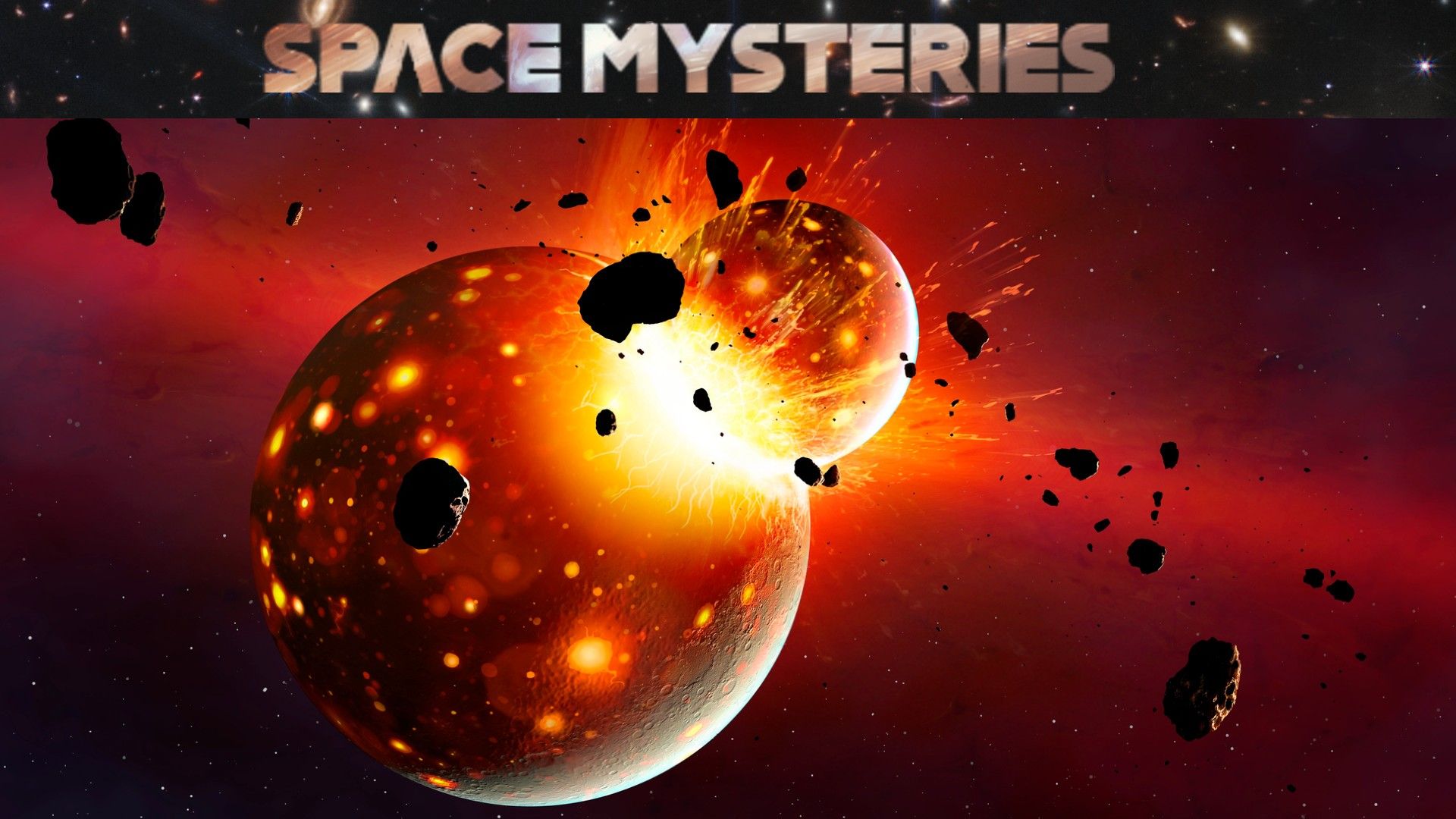
A new study led by Adeene Denton of Southwest Research Institute and colleagues at the University of Arizona's Lunar and Planetary Laboratory examined how the heat and physical strength of two colliding bodies may have influenced the suspected ancient impact that formed the moon. The team's simulations revealed that under certain conditions, the moon could have formed in as little as five hours, while other impacts might have produced a debris disk that coalesced more slowly. The research challenges some long-held views about the giant-impact hypothesis while lending new support to others, particularly regarding how temperature conditions affect impact outcomes.
Context
The giant-impact hypothesis—that Earth collided with a Mars-sized protoplanet called Theia within the first 100 million years of solar system history—is the leading scientific theory for lunar origin. Multiple lines of evidence support this scenario, including similar stable-isotope ratios in moon rocks and Earth rocks, the unusually high angular momentum of the Earth-moon system compared to other rocky planets, the moon's small iron core and lower density, and the relative depletion of volatile substances in lunar material. The theory has held this position since a landmark 1984 conference in Kona, Hawaii. Understanding moon formation requires accounting for not just the spatial dynamics of impact, but also the temporal and thermal conditions under which it occurred.
What's disputed
Significant uncertainty remains about the precise timing and conditions of the giant impact. Current estimates place the moon's formation anywhere from 40 to 120 million years after solar system formation—a wide range with major implications for models of the Theia impact. An earlier collision would have involved a hotter Theia due to greater radiogenic heating, while a later impact would have meant a cooler and stronger Theia. Researchers remain undecided on how temperature affects the impact outcome and whether the moon formed in one scenario versus another.