Mariner 2 performs first-ever deep-space rocket maneuver, Sept. 4, 1962
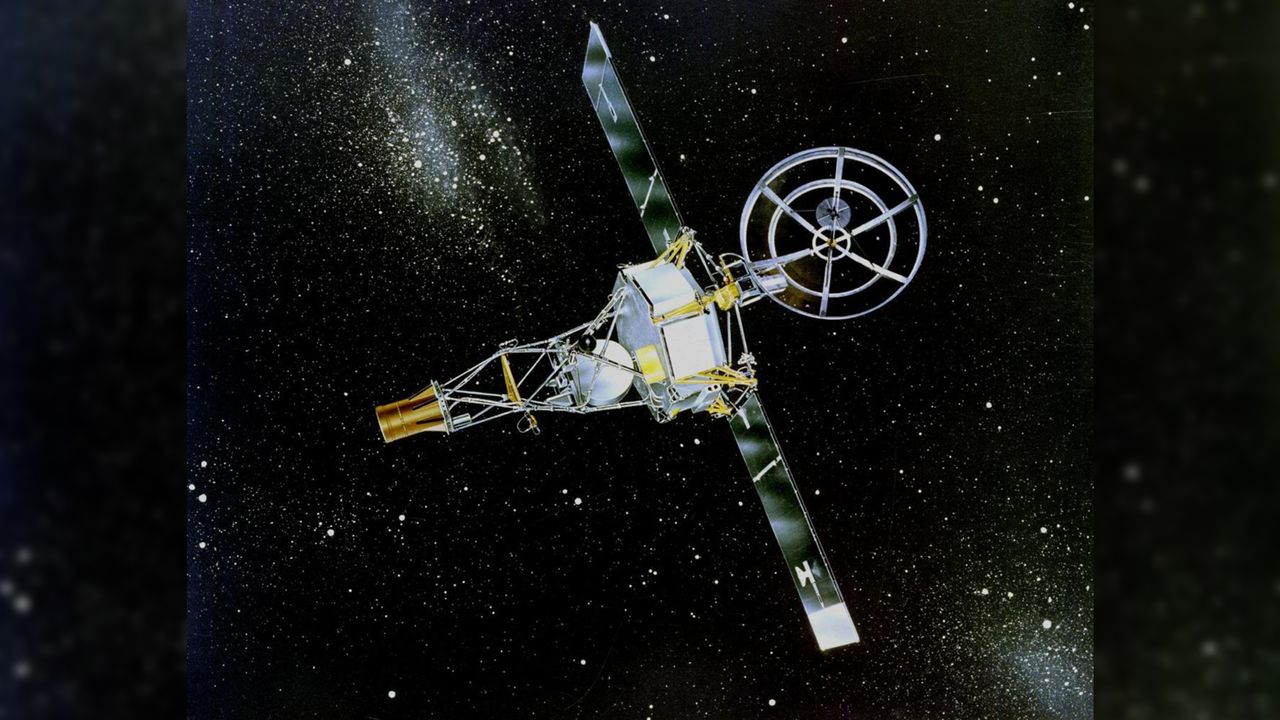
NASA's Mariner 2 spacecraft executed a mid-course correction 1.5 million miles from Earth to correct its trajectory toward Venus after an insufficiently accurate launch.
What happened
On September 4, 1962, eight days after launch, NASA's Mariner 2 spacecraft performed the first rocket maneuver in deep space. Located 1.5 million miles from Earth, it executed a mid-course correction requiring five separate commands from mission control to roll, pitch, turn, and burn its engine—a process lasting up to 36 minutes. The maneuver adjusted Mariner 2's trajectory from a path that would have carried it 238,600 miles from Venus's center to one passing within 21,607 miles. One hundred days later, Mariner 2 became the first spacecraft to successfully fly by another planet.
Context
The Atlas-Agena rocket that launched Mariner 2 lacked sufficient accuracy to place the spacecraft on a direct course for Venus without correction. Without the mid-course adjustment, Mariner 2 would have missed Venus entirely. At the time, in 1962, reaching another planet with a spacecraft remained largely experimental; the ability to adjust a probe's trajectory in deep space represented a critical demonstration of mission control capability. Today, such mid-course corrections are routine components of space mission planning, though they remain mission-critical moments. The success of this maneuver established a foundational technique that enabled subsequent achievements like the gravity-assist flybys that allowed later missions to explore multiple planets.