DARPA to Validate Microsoft's Majorana 2 Quantum Computing Platform Amid Scientific Skepticism
Microsoft has announced plans to deploy a fault-tolerant quantum computer by 2029 based on its Majorana 2 platform, which is now undergoing independent evaluation by DARPA despite significant pushback from the physics community.
What happened
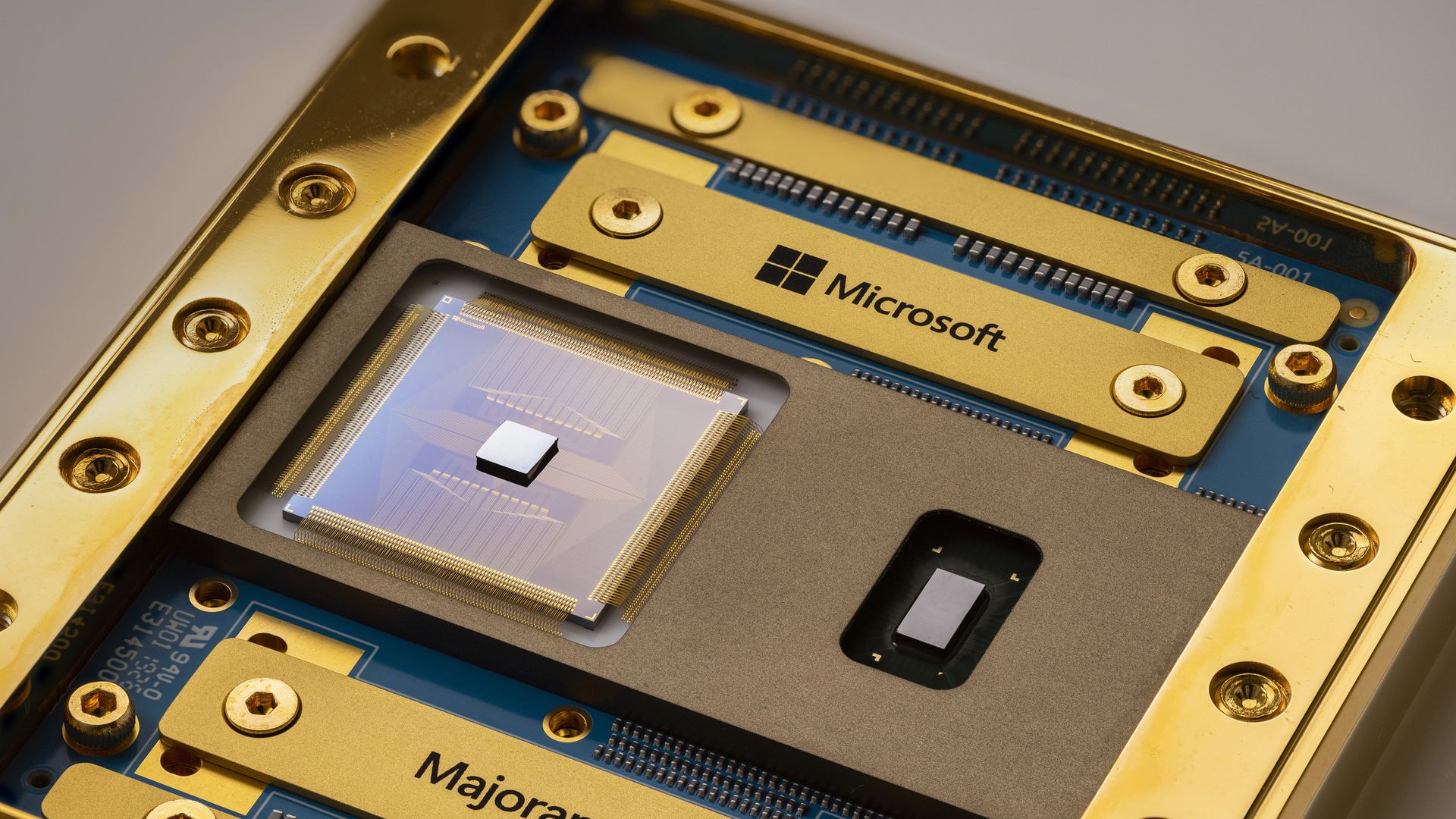
Microsoft announced in a preprint study published in June 2025 describing its Majorana 2 quantum computing platform. According to internal research, the platform creates qubits that can maintain quantum states for between 20 seconds and a minute—vastly longer than conventional qubits lasting only microseconds. The company has partnered with DARPA to conduct hardware validation and opened a new lab at the University of Maryland. This follows an earlier February 2025 Nature publication announcing the creation of topological qubits. In August 2025, Microsoft said it would field a scalable, fault-tolerant quantum computer by 2033, but after the DARPA partnership and opening the University of Maryland lab, the company moved up this timeline to 2029, based on research suggesting Majorana 2 represents a generational breakthrough.
Context
Microsoft's bet on topological quantum field theory (TQFT), initiated in 2005 by mathematician Michael Freedman, represents a fundamentally different approach from conventional superconducting qubits. The theory's appeal is that qubits built on topological principles could be far more resilient to environmental noise and perturbation because their quantum states depend on global topology rather than local geometry. If verified, Majorana 2 would give Microsoft significant competitive advantage in the race to build a practical, universal quantum computer. DARPA's validation is a consequential test of whether these theoretical advantages can be realized in working hardware.