Giovanni Cassini discovers Iapetus, Saturn's second known moon
On October 25, 1671, Italian astronomer Giovanni Cassini identified a previously unknown moon orbiting Saturn, later revealed to have starkly contrasting bright and dark hemispheres.
What happened
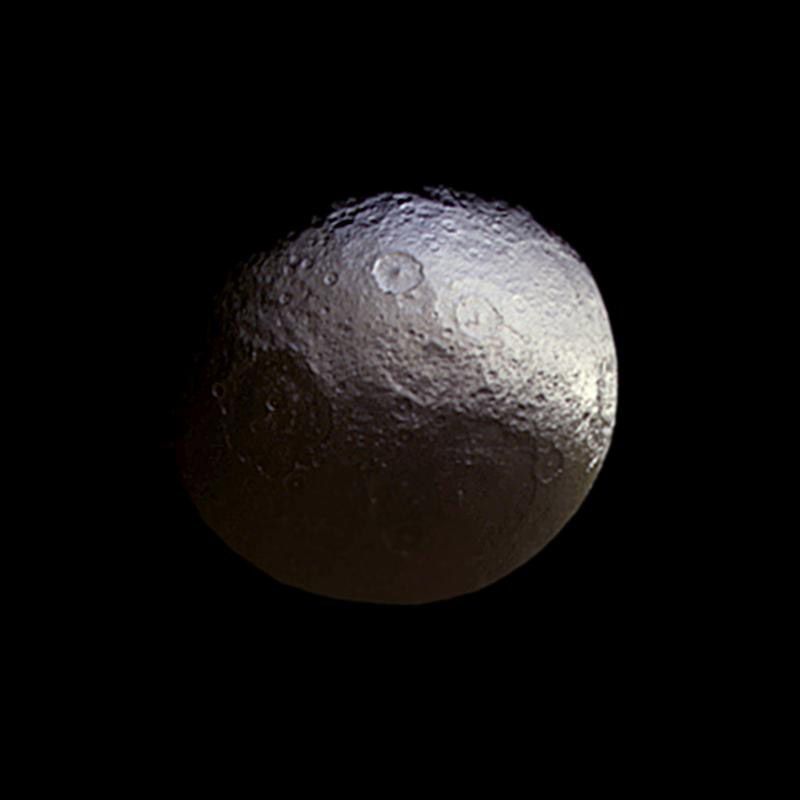
On October 25, 1671, Giovanni Cassini discovered Iapetus, the second moon known to orbit Saturn. Cassini initially observed it as a small speck on Saturn's west side, then calculated its orbit to predict its reappearance on the east side 39 days later. When the moon failed to appear as expected, Cassini deduced that Iapetus must be darker on one hemisphere than the other, making it invisible when the dark side faced Earth. This was the first of four Saturn moons Cassini would discover; Christiaan Huygens had discovered Titan approximately six years earlier.
Context
The discovery of Iapetus' contrasting hemispheres—earning it the nickname 'yin-yang moon' from later spacecraft imagery—has contributed to scientific understanding of moon formation around Saturn. Computer simulations and research suggest that Saturn's inner moons and rings are relatively young, while the more distant moons Titan and Iapetus may have formed at different times. Current theory holds that Saturn may have originally had a different configuration of moons whose orbits were disturbed by orbital resonance, leading to collisions that created the present system of moons and rings from the resulting debris.