Stone Age burial unearthed in Poland with decapitated heads and tooth necklace
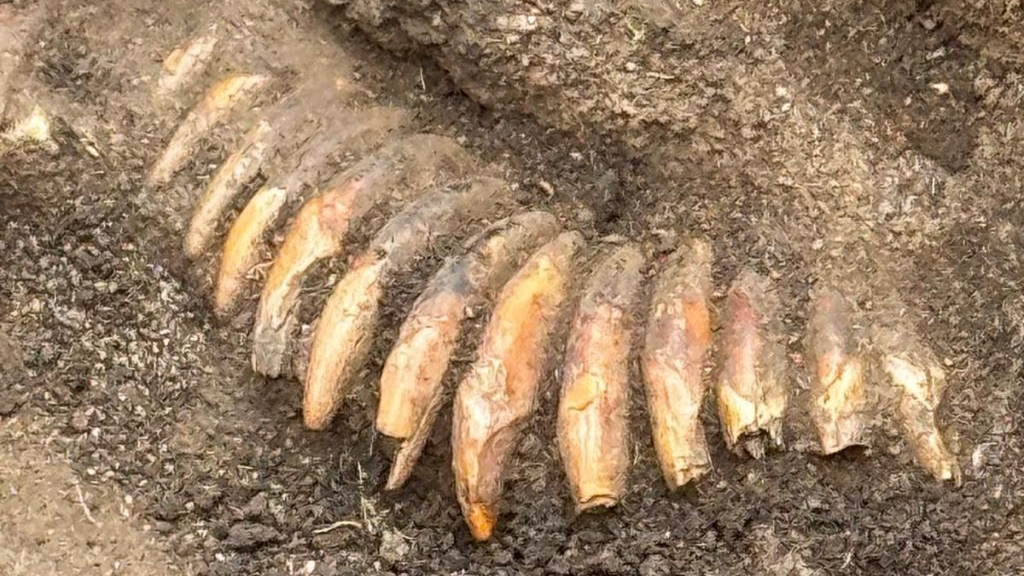
Archaeologists discovered a 4,900-year-old grave in southwest Poland containing an elite male buried with two human skulls, a 42-tooth necklace, and a battle ax.
What happened
During excavation of a Roman-period cemetery near Wrocław, Poland, archaeologists uncovered a Stone Age burial dated to approximately 2900 B.C. The grave contained the skeleton of an adult male accompanied by two decapitated human heads, a necklace composed of 42 precisely drilled mammal teeth (incisors and canines from wolves, deer, bears, and possibly humans), a battle ax made of serpentinite, amber beads, and a flint blade. Paweł Dąbrowski, a biological anthropologist at Wrocław Medical University, noted the necklace's deliberate construction and arrangement, suggesting the deceased was a person of importance, possibly a warrior, hunter, or family clan leader.
Context
The burial's distinctive grave goods and the presence of human skulls as funeral offerings suggest this individual held elevated status within Middle Neolithic society. A similar elite burial with axes, flint tools, and amber beads was previously discovered nearby; the researchers believe both may belong to the Corded Ware culture, which is associated with the spread of Indo-European languages across Europe and Asia. These are currently the only two burials of this type known in the area. Further analysis of remains from both burials is planned to determine whether the individuals were related and to reconstruct aspects of their lives nearly 5,000 years ago.
What's disputed
Decapitation of the skulls has not been confirmed; further analysis is needed to rule out or confirm whether the heads were actually severed. The exact cultural identity and any family relationship between the two elite burials remain under investigation.