HPE Supercomputer to Launch to Moon for First Time Aboard Astrolab's FLIP Rover
A high-performance computing system with GPU and AI capabilities will launch to the lunar south pole later this year as part of NASA's Griffin-1 mission, marking the first test of such advanced technology on the moon's surface.
What happened
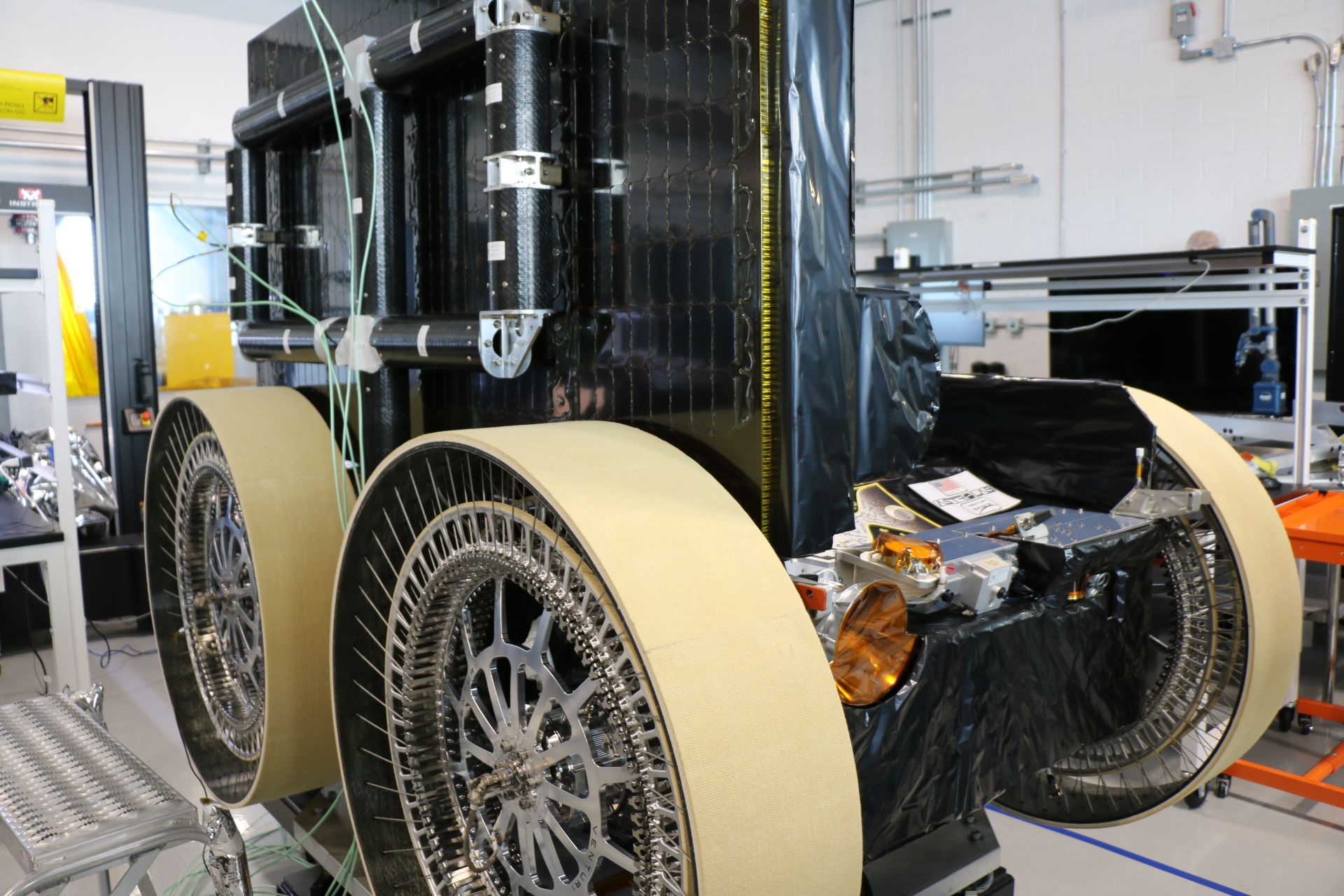
Astrolab will launch its uncrewed rover FLIP to the lunar south pole later this year carrying Hewlett Packard Enterprise's Spaceborne Computer-4, a lightweight, compact supercomputer designed for space environments. The mission is part of Griffin Mission 1, a NASA Commercial Lunar Payload Services (CLPS) program flight. The computer features a 64-bit CPU with GPU, is powered by batteries and solar cells, and will be paired with solid-state storage from KIOXIA. The mission will test the computer's ability to survive extreme lunar conditions including multiple lunar nights with up to 150 hours of darkness, and will demonstrate AI capabilities including autonomous visual data analysis, navigation, mapping, terrain analysis, and a machine-learning localization algorithm from NASA's Jet Propulsion Laboratory previously tested on Mars.
Context
This represents the first deployment of high-performance computing and AI on the lunar surface, testing technologies intended to support NASA's Artemis program for human lunar return and future lunar habitation and economic activity. The FLIP rover must operate semi-autonomously for extended periods when astronauts are not present and travel hundreds of kilometers across the lunar surface. The localization algorithm being tested addresses a fundamental challenge of lunar and Martian exploration: the absence of GPS, requiring terrain-matching algorithms to determine the rover's position and avoid hazards. Astrolab is one of two companies NASA selected to develop drivable rovers for Artemis, and this mission will demonstrate how commercial lunar mobility platforms can support technology development and scientific research.
What's disputed
The exact applications and scope of the AI capabilities to be demonstrated remain unclear; HPE stated that an AI services container will demonstrate deployment of scalable AI applications but specific use cases beyond the localization software experiment are not yet determined. How these capabilities might be integrated into future crewed lunar missions has also yet to be established.