Tesla unveils 'Rocket' Roadster with SpaceX thrusters capable of brief flight; experts question practicality
Tesla demonstrated a flying version of its Roadster using cold-gas thrusters at a SpaceX facility, but experts and competitors are skeptical of its real-world viability.
What happened
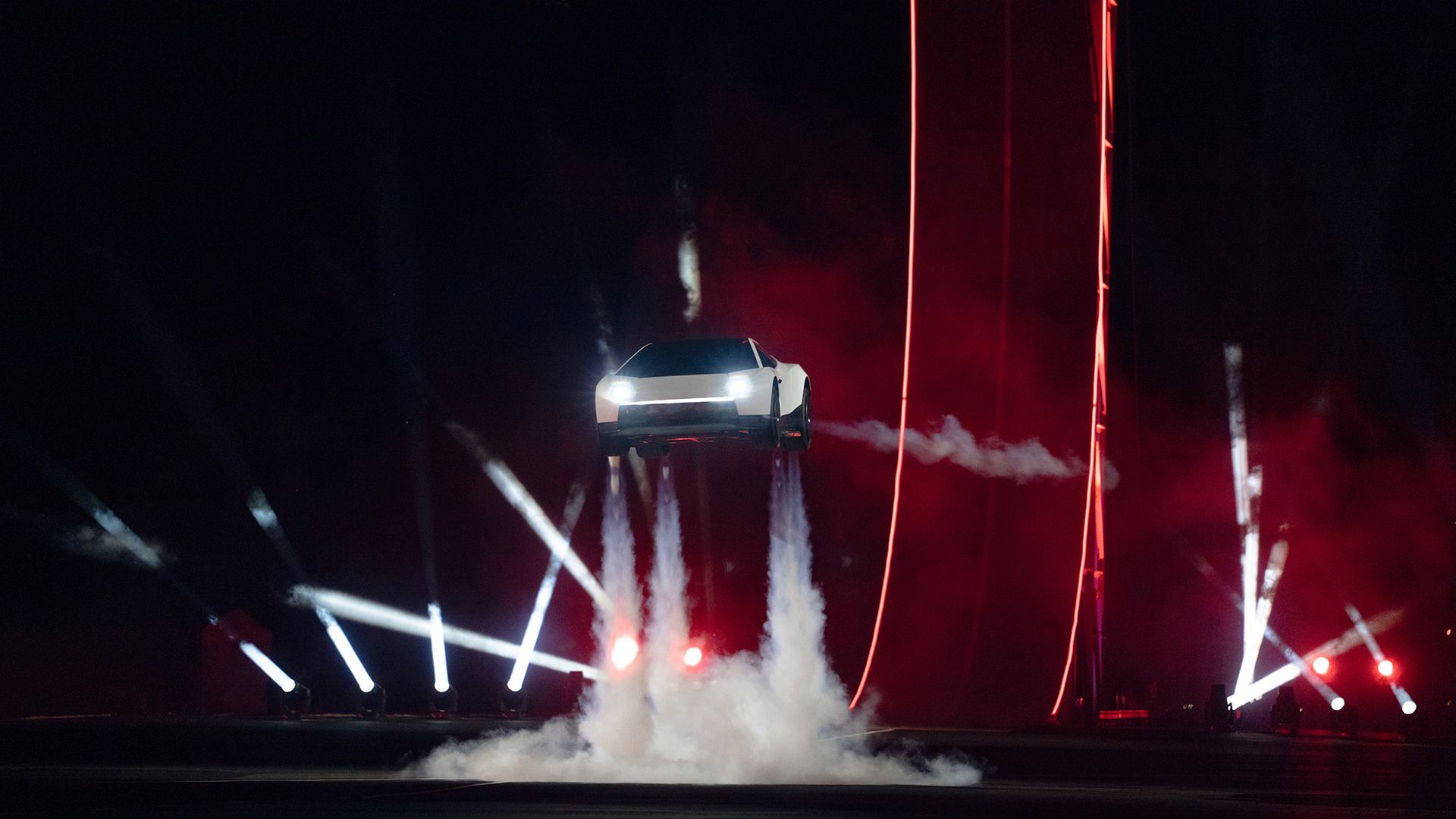
Tesla and SpaceX CEO Elon Musk revealed a new Roadster variant called the Rocket on October 15 at SpaceX's Texas testing facility. The vehicle, operated remotely, performed a 180-degree barrel roll and jumped over a row of parked cars using SpaceX-developed cold-gas thrusters that release high-pressure gas to generate thrust. Tesla is offering three Roadster variants: the Performance model with a suction system designed to improve traction and handling, the Thrust model with rear thrusters claimed to achieve 0-60 acceleration in under one second, and the single-seat Rocket with thrusters positioned around the vehicle to enable short bursts of flight and in-air control. Tesla stated the Rocket is not approved for public road use and availability depends on regional regulations. Production is scheduled for 2028, and the Rocket will be available by invitation only.
Context
The demonstration frames Tesla's entry into the flying car market, where Alef Aeronautics—using electric propellers instead of compressed gas—has marked its 1,000th logged flight over eleven years. The competitive context raises questions about which technology proves more practical. Tesla has a track record of missing production deadlines, having delayed the Optimus humanoid robot multiple times since 2021. Musk explicitly stated the Rocket "is not necessarily a safety-optimized car," signaling recognized tradeoffs between capability and real-world safety constraints.
What's disputed
Whether the vehicle can function outside controlled demonstration conditions. AI scientist Yann LeCun called the demo a "marketing stunt" and calculated the compressed-air system provides only 5-10 seconds of useful thrust, questioning whether a practical flying car can be built around this technology. Tesla has not disclosed the vehicle's maximum flight duration or distance. Questions also remain about regulatory approval beyond Tesla's current statement that public road use is not permitted.