Europe's ExoMars 2016 mission partially succeeds at Mars; orbiter operational, lander lost
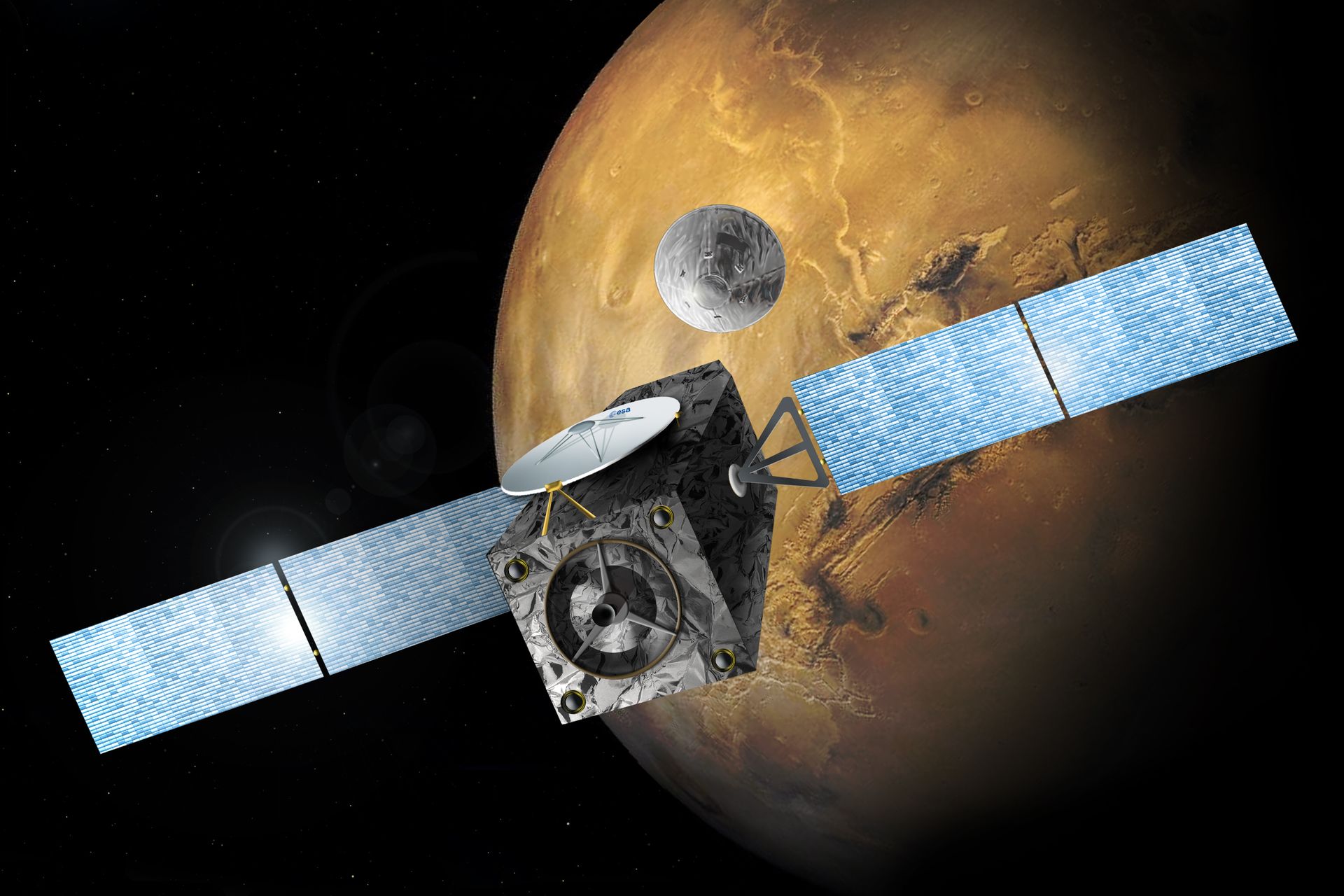
The Trace Gas Orbiter reached Mars orbit successfully on October 19, 2016, but its companion Schiaparelli lander crashed during descent.
What happened
On October 19, 2016, the European Space Agency's ExoMars 2016 mission arrived at Mars, consisting of the Trace Gas Orbiter and the Schiaparelli lander. The two spacecraft separated on October 16, three days before arrival. The Trace Gas Orbiter successfully entered Mars orbit and remains functional today, studying methane and other atmospheric gases. The Schiaparelli lander, however, crashed during its descent. It stopped communicating with Earth one minute before its planned landing; NASA's Mars Reconnaissance Orbiter later photographed its crash site and jettisoned parachute nearby. Officials suspect a data glitch prevented the descent thrusters from firing as designed, denying the lander sufficient deceleration for a safe touchdown.
Context
ExoMars 2016 was designed as the first phase of a two-mission program, with the Schiaparelli lander intended to test landing techniques for a planned 2018 rover mission and the Trace Gas Orbiter to serve as an atmospheric research platform and communications relay for that rover. ESA officially characterized the mission as '96% successful' due to the orbiter's survival and ongoing functionality. The lander's failure delayed the ExoMars 2018 rover mission, now designated Rosalind Franklin. The rover's launch has been further postponed—originally planned for 2018—and is now not expected before 2028, with a Mars landing targeted for 2030, partly due to ESA severing its Russian partnership over geopolitical circumstances.