Neanderthal skeleton from 75,000 years ago bears hallmarks of fatal spear wound to chest
Archaeologists analyzing remains from Shanidar Cave in Iraq conclude a Neanderthal died from a wooden spear piercing the chest, possibly a targeted kill shot.
What happened
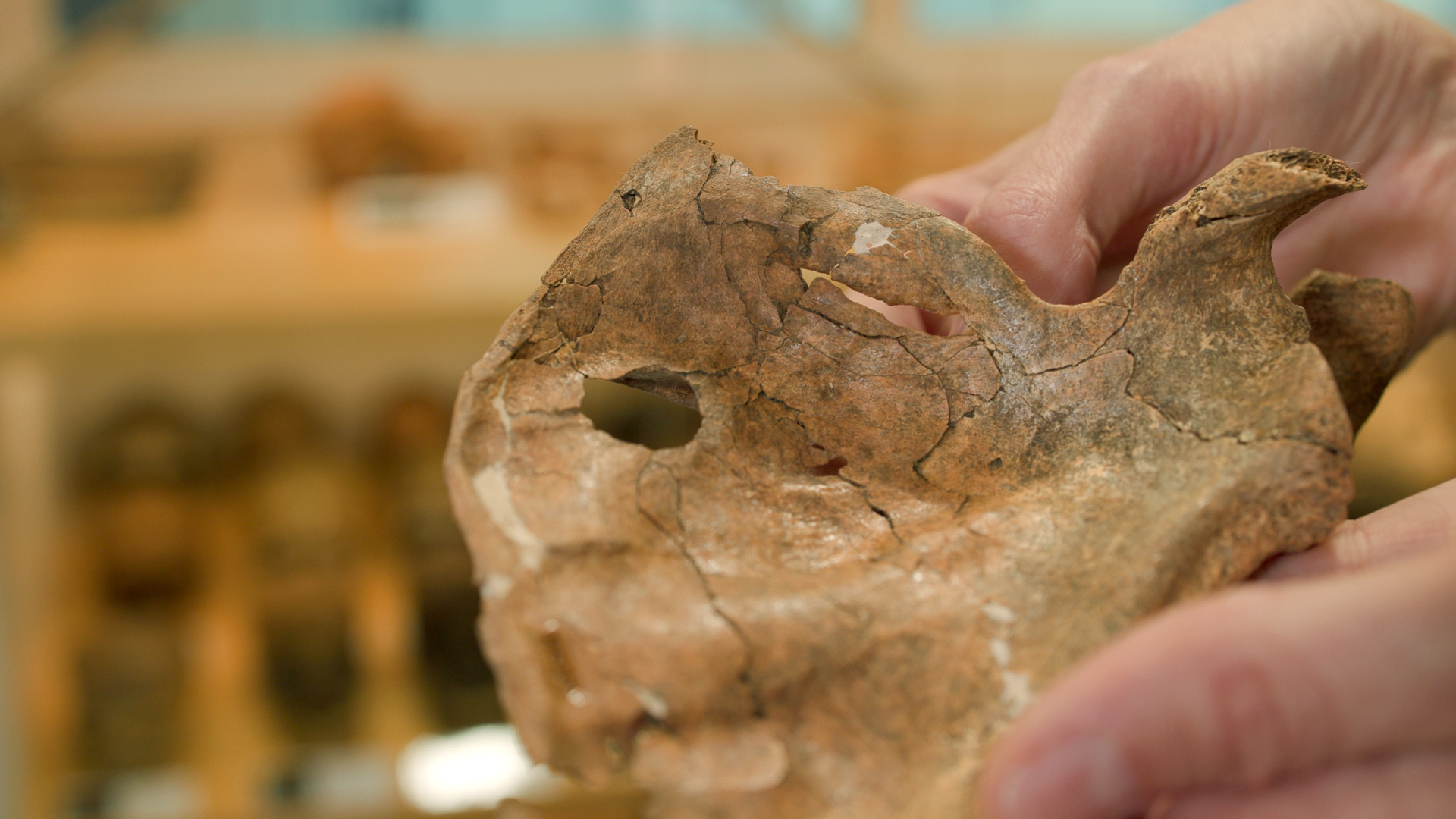
The skeleton of Shanidar A, a Neanderthal who died around age 45 and was buried 75,000 years ago in Shanidar Cave, Iraq, bears a round hole approximately 0.6 inches in diameter in the left shoulder blade. Researchers determined the hole resulted from perimortem penetrating trauma, such as that caused by a projectile or thrusting implement like a spear. The shape of the wound matches experimental evidence of wooden spear injuries rather than stone-tipped weapons. Study lead author Emma Pomeroy states the position and force required suggest an intended kill shot directed toward the heart, though whether the death resulted from violence between Neanderthals or a hunting accident remains unclear.
Context
The discovery adds to evidence of intentional Neanderthal burials at Shanidar Cave, a site where experts have documented repeated burials suggesting the group assigned specific meaning to the location. The same skeleton also shows evidence of prior trauma—fractured and heavily worn teeth indicating the individual sustained a major facial blow and survived it for at least a year, requiring care and support from other Neanderthals. This case is the second mortally wounded Neanderthal found at the site; Shanidar 3, who died 50,000 years ago, bore a deep rib slice possibly from a stone-tipped spear. Together, the findings suggest that 75,000 years ago, Neanderthal life involved complex social behaviors including caregiving and burial, and encounters with lethal violence.
What's disputed
Whether the spear wound was inflicted by another Neanderthal or resulted from a hunting accident is unclear. An uninvolved archaeologist notes it would be worth comparing whether a wild goat horn, intensely hunted at the site, might have caused the injury. Whether the two stabbed Neanderthals 25,000 years apart represent a pattern or coincidence is acknowledged as uncertain by the study authors.