Neglected theoretical neutrino could explain matter's dominance over antimatter
A new study proposes that a hypothetical heavy right-handed neutrino dominated the early universe and may account for why matter prevailed over antimatter.
What happened
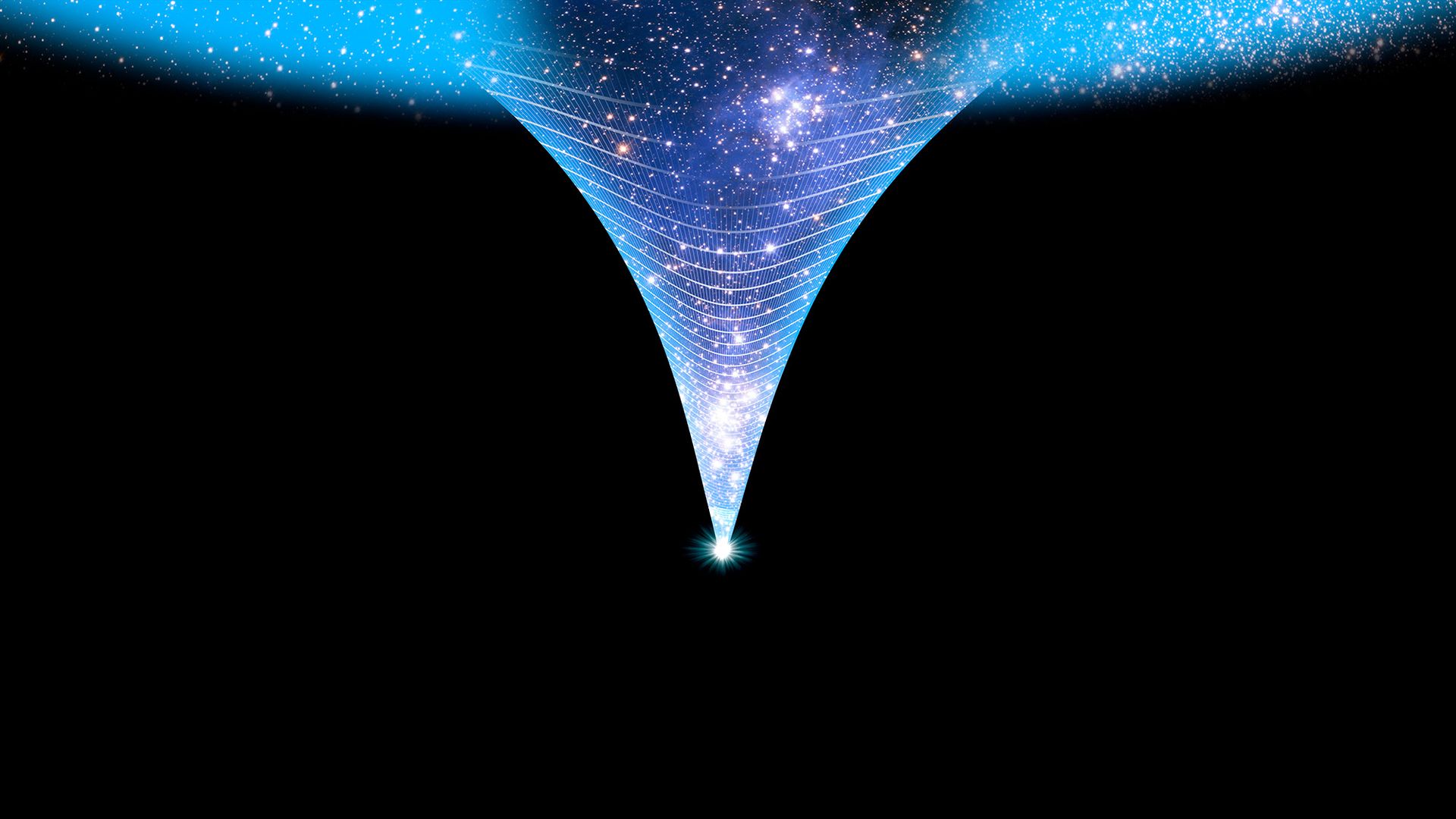
According to a study published September 8 in Physical Review Letters, physicists Rishav Roshan and Sudipta Show examined a right-handed neutrino that is often overlooked in theoretical models. The particle, in their main example weighing about 100 trillion times as heavy as a proton, would have briefly held more energy than everything else in the infant universe combined after the Big Bang. As the early universe cooled, the particle's energy would have become increasingly concentrated in its mass, eventually dominating the cosmos's expansion dynamics until it decayed. This period of heavy-neutrino domination would have altered the timing and conditions of key particle interactions, potentially allowing a lighter right-handed neutrino (about 100 billion times a proton's mass) to produce the observed surplus of matter over antimatter.
Context
The Standard Model predicts neutrinos should be massless, yet they demonstrably have mass and switch between flavors—a puzzle that the seesaw mechanism attempts to solve by invoking heavy right-handed neutrino partners. Right-handed neutrinos do not interact via the weak nuclear force and have never been directly detected; all observed neutrinos are left-handed. The Big Bang should have created equal amounts of matter and antimatter that would annihilate each other, making the existence of the observable universe inexplicable without an asymmetry-generating mechanism. Right-handed neutrinos are proposed to address this matter-antimatter imbalance through decay processes in the early universe. Testing this hypothesis is extremely difficult since the particles are far too massive to create in accelerators; indirect detection methods such as gravitational-wave signatures from the early universe offer potential routes to confirmation.