Previously unknown megaraptor dinosaur discovered in UK museum after century in storage
Invictibellatrix amberina, found in a Natural History Museum drawer, is the first megaraptor identified in Europe and may explain how these predators spread from Asia to the southern supercontinent Gondwana.
What happened
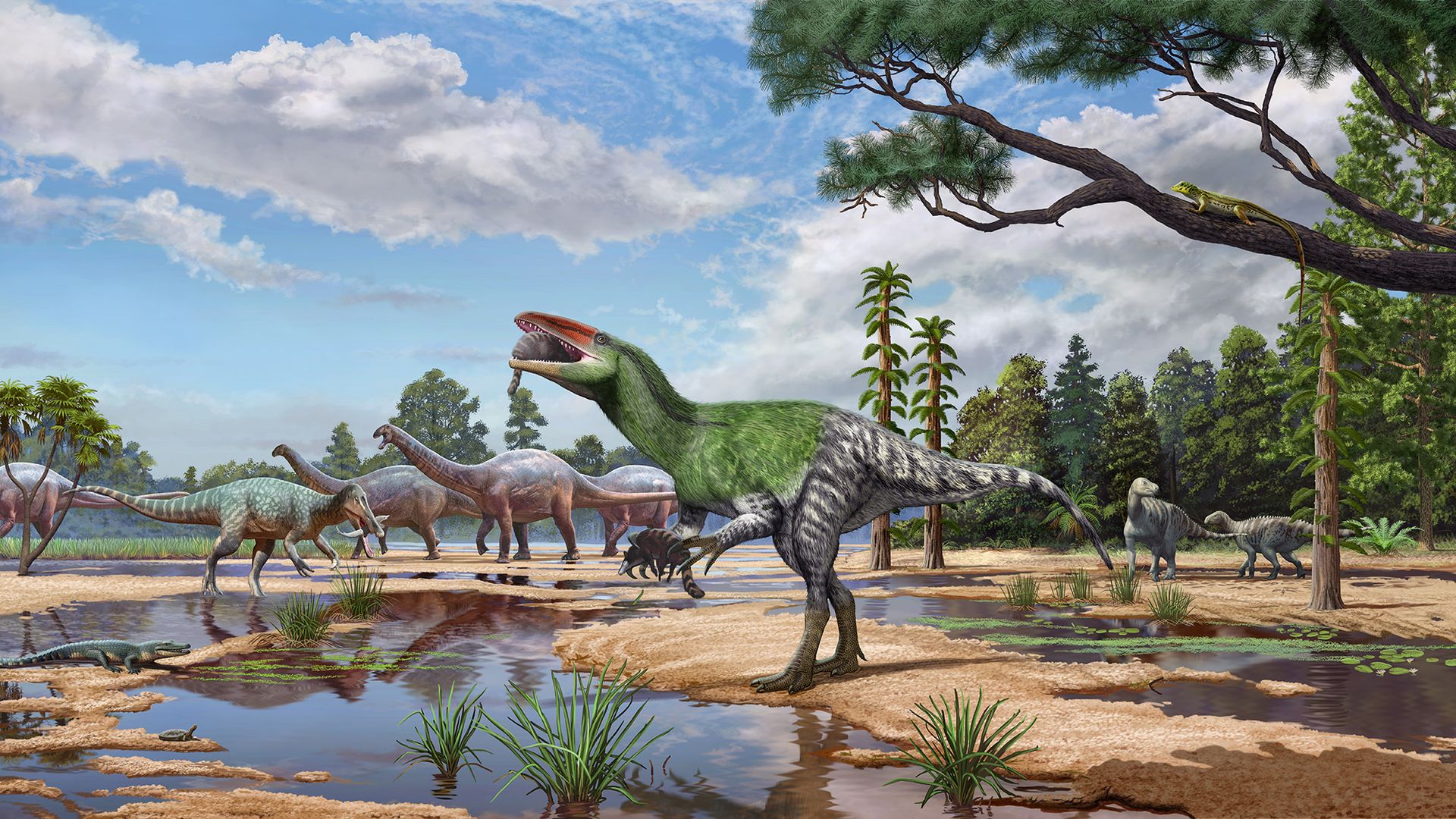
A dinosaur skull fragment discovered in 1924 on the Isle of Wight and stored at London's Natural History Museum for nearly 100 years has been identified as a previously unknown species of megaraptor, a two-legged carnivore related to tyrannosaurs. Using micro-CT scanning and 3D digital modeling of the braincase, researchers identified distinctive anatomical features—including an oval opening for the spinal cord and an hourglass-shaped ridge—that differentiated it from other meat-eating dinosaurs and placed it within the Megaraptora family tree. The species, named Invictibellatrix amberina (combining Latin for "unconquered female warrior" with amberina referring to amber in the surrounding rocks), lived about 120 million years ago and was relatively small, estimated at 10 to 13 feet long and weighing 200 to 300 kilograms. The fossil was formally described in an October 14 study published in Royal Society Open Science.
Context
This discovery fills a significant gap in the megaraptor fossil record. Scientists have long theorized that megaraptors originated in Asia and spread to other continents, eventually dominating as predators in the southern supercontinent Gondwana (which included present-day Africa, South America, and Antarctica), but the lack of European fossils left this migration route unverified. The new study's evolutionary models suggest I. amberina descended from Asian megaraptors that dispersed into Europe around 130 million years ago, then likely spread through Africa and into Gondwana via temporary land bridges and connections across the Tethys Ocean. The find demonstrates the value of systematic examination of historical museum collections, where other undiscovered specimens may remain.