Crows Match Primate Decision-Making Speed While Processing Visual Information Twice as Fast
Researchers found that carrion crows solve visual motion tasks using the same mathematical logic as primates but complete the process in half the time, despite possessing fundamentally different brain architecture.
What happened
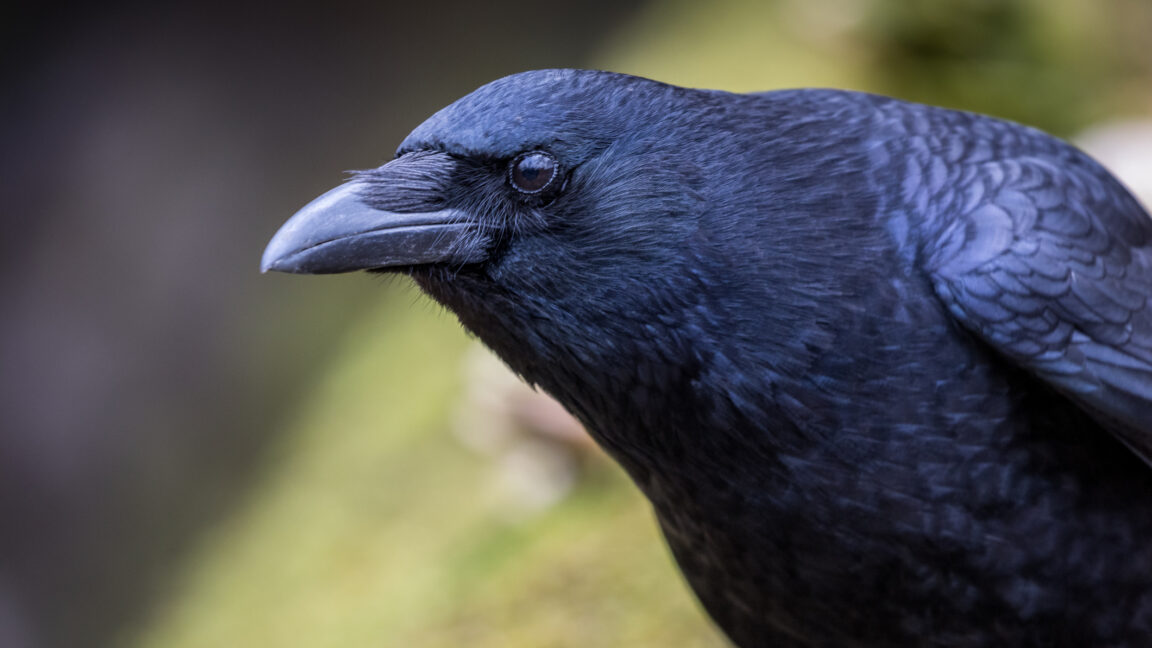
Neurobiologists Andreas Nieder and Philipp Schmidbauer at the University of Tübingen conducted a random-dot-motion task experiment with two hand-raised carrion crows, the same task previously used to study primate decision-making in monkeys. Crows were presented with clouds of white dots on a monitor, with varying percentages moving coherently in one direction, and had to peck targets to indicate the direction of motion. The crows solved the task using the same mathematical logic as primates—accumulating visual evidence until reaching a decision threshold—but accomplished this two times faster than mammals despite having no neocortex, the brain structure primates use for this decision-making process.
Context
The finding addresses a fundamental neuroscience question: how differently organized brains can arrive at identical decision-making strategies. Primates use the neocortex to gather visual evidence through escalating neuron firing rates until crossing a threshold for commitment to a decision. The results suggest that the avian brain, organized entirely differently, can implement functionally equivalent decision-making mechanisms while operating at higher speed. This demonstrates that computational efficiency is not uniquely tied to primate brain architecture and raises questions about the neural substrates underlying decision-making across species.