Blue Origin New Glenn rocket explosion sent infrasound 1,000 miles across US, equivalent to Chernobyl blast
A May 29 explosion during a static test at Cape Canaveral released ultra-low-frequency sound waves detected across the country, with researchers estimating explosive power matching the 1986 Chernobyl reactor failure.
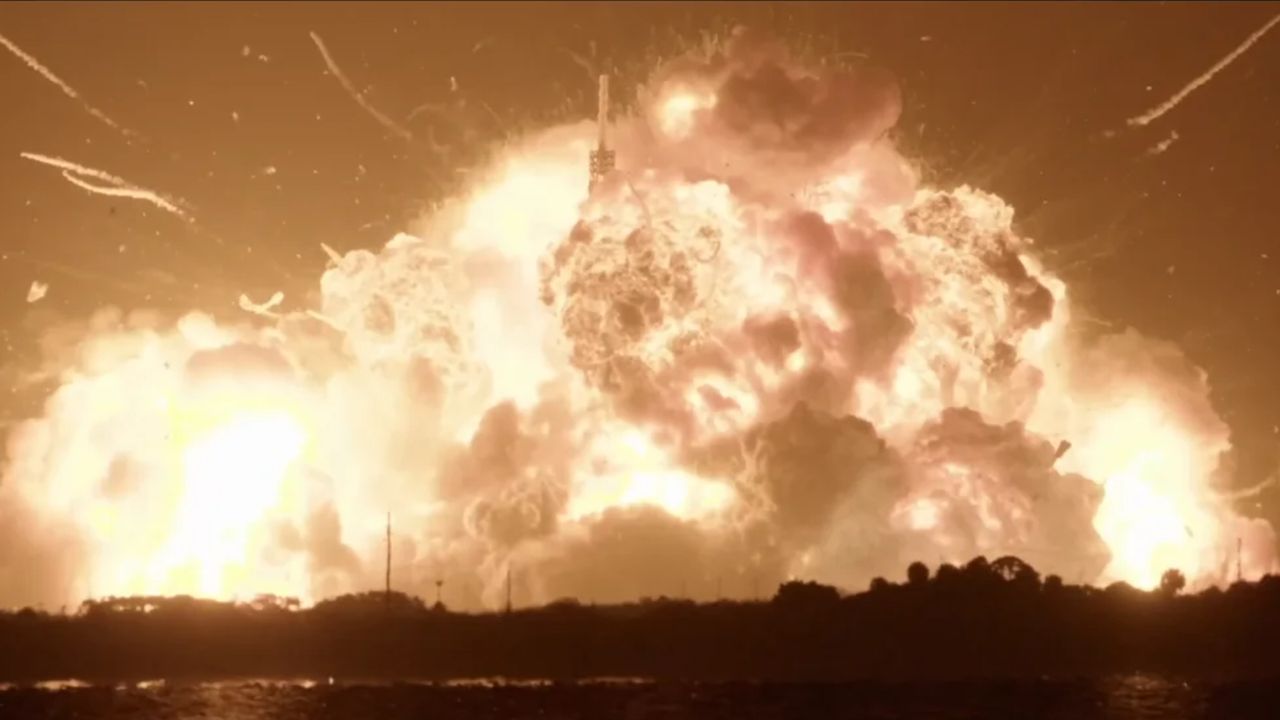
What happened
On May 29, Blue Origin's New Glenn rocket booster exploded during a hotfire test at Cape Canaveral Space Force Station, sending shockwaves that were heard audibly up to 135 miles away. Infrasound data from 36 listening stations across the US detected ultra-low-frequency sound waves from the blast, with the farthest station in northeast Texas, 1,046 miles away. Researchers published analysis on August 12 in The Seismic Record estimating the explosion's power at 0.131 kilotons (144 US tons) of TNT equivalent—slightly higher than the initial blast that destroyed the Chernobyl nuclear reactor in 1986. Blue Origin revealed on August 5 that a faulty oxygen valve likely caused the explosion. Only 3-6% of the rocket's cryogenic propellant was consumed in the initial blast, with remaining fuel burning more gradually in the fireball.
Context
The New Glenn is Blue Origin's largest commercial rocket, comparable in size to NASA's Space Launch System and designed to compete with SpaceX's Starship. The rocket had launched successfully three times prior: first in January 2025, then in November 2025 when it launched NASA spacecraft to Mars, and in April 2025 when it reached space but failed to deploy a communication satellite. Blue Origin successfully landed the rocket's reusable booster during the second launch in November 2025, making Blue Origin the second company to achieve reusable booster recovery. The explosion damage is expected to require at least a year to repair and affects not only Blue Origin's launch capability but could delay NASA's proposed moon base, which depends on New Glenn for component launches. The incident demonstrates infrasound as a potentially valuable tool for tracking spacecraft accidents and large explosions globally, a technique researchers have previously used to monitor meteors and spacecraft atmospheric reentry.