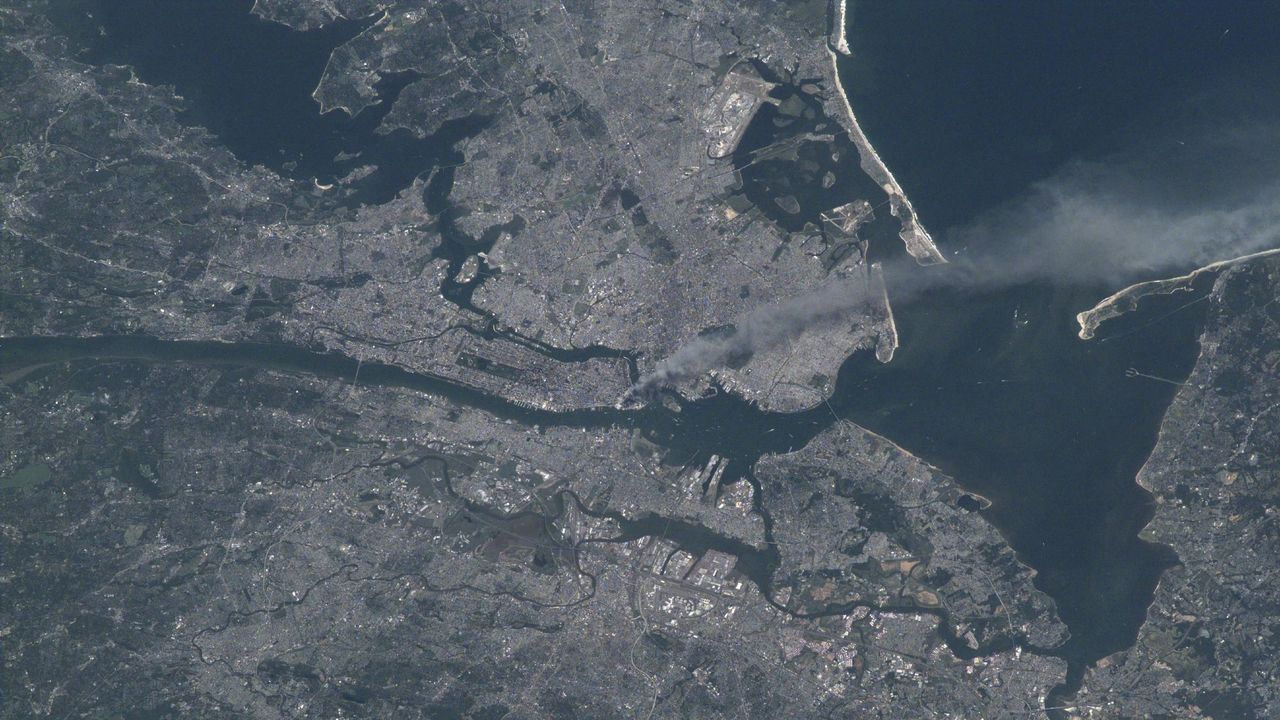
NASA astronaut's photograph from space captured smoke from World Trade Center attacks on September 11, 2001
Frank Culbertson, the only American in orbit during the attacks, photographed a massive plume of smoke rising from Manhattan from aboard the International Space Station.
What happened
On September 11, 2001, NASA astronaut Frank Culbertson, commanding the International Space Station at an altitude of approximately 250 miles above Earth, photographed thick smoke pouring from lower Manhattan in the immediate aftermath of the terrorist attacks. Culbertson passed over New York City shortly after learning what was occurring and captured the image around the time of or shortly after the collapse of the second World Trade Center tower. The photograph shows a lengthy plume of smoke with what Culbertson described as an "odd bloom" at its base. In subsequent days, Culbertson wrote letters describing the experience, noting the stark contrast between the ISS's mission to improve life on Earth and witnessing life being destroyed. He also learned that Charles "Chic" Burlingame, a pilot he knew from flight school, was the pilot of the plane that crashed into the Pentagon.
Context
Culbertson was the only American not on Earth during the attacks, giving him a unique vantage point from which to witness the unfolding tragedy. He and his crew observed other notable effects visible from orbit: within approximately two orbits, all contrails normally crisscrossing the United States had disappeared due to the grounding of all civilian aircraft, with the sole exception being a single contrail moving eastward across the Midwest—Air Force One carrying President Bush back to Washington, D.C. The photograph remains an iconic historical document of September 11, capturing the immediate physical devastation visible from space.