Wright-Patterson AFB Drone Incidents: Synchronized Aircraft, Radio Disruptions, and Unidentified Operators
Newly released records detail three separate drone incursions at a U.S. Air Force base in December 2024, including synchronized formations and military communications interference, with operators remaining unidentified despite FBI investigation.
What happened
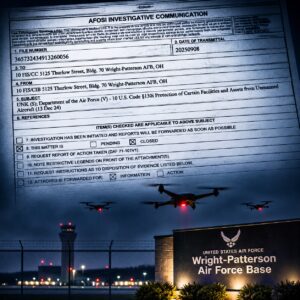
Between December 11-17, 2024, Security Forces personnel at Wright-Patterson Air Force Base in Ohio reported three separate periods of unauthorized drone activity. The first incident on December 11-12 involved a four-rotor unmanned aircraft approximately five by six feet in size, hovering over the installation's military working dog kennel and displaying red, white, and green lights. On December 14, witnesses described observing a drone one to two feet long traveling at 30-40 mph that performed a vertical loop, followed by four drones in diamond formation that extinguished their lights, banked right, and accelerated upon being illuminated by spotlight. During these encounters, Security Forces personnel reported that their radios became unable to send signals and produced only muffled, distorted sound when the drones were near; radio function returned to normal after the aircraft departed. Air Force Materiel Command, FAA offices in Columbus and Cincinnati, and other authorities reported no knowledge of authorized drone flights matching the descriptions. All three investigative matters were handled jointly by the FBI and Air Force Office of Special Investigations (AFOSI), with operators never identified in any case.
Context
The incidents led to the closure of Wright-Patterson Air Force Base's airfield. The newly released records, obtained through FOIA challenge nearly two years after the events, reveal that AFOSI initially claimed no responsive documents existed, then subsequently stated all records had been referred to the FBI. The released communications carry a transmittal date of September 8, 2025, nearly nine months after the incidents and shortly after The Black Vault's administrative appeal, raising questions about where investigative information was maintained and why it was not located during the original search. The reported synchronized maneuvers, apparent responsiveness to spotlight illumination, and simultaneous radio disruptions affecting military communications equipment represent operational characteristics that military and investigative personnel found noteworthy enough to document and investigate with federal involvement.
What's disputed
The source does not establish the technical mechanism causing the reported radio disruptions, noting that the released records contain no technical assessment explaining this phenomenon. The source does not provide explanations for AFOSI's initial 'no records' response or clarify the precise timeline and location of records storage before they entered the agency database.