Ancient volcano discovered beneath eastern England; experts debate 'supervolcano' designation
Geologists identified a 454.4 million-year-old volcano in Norfolk and Lincolnshire using zircon crystals, confirming a massive eruption whose ash reached Scandinavia, but volcanologists question whether the term 'supervolcano' accurately describes it.
What happened
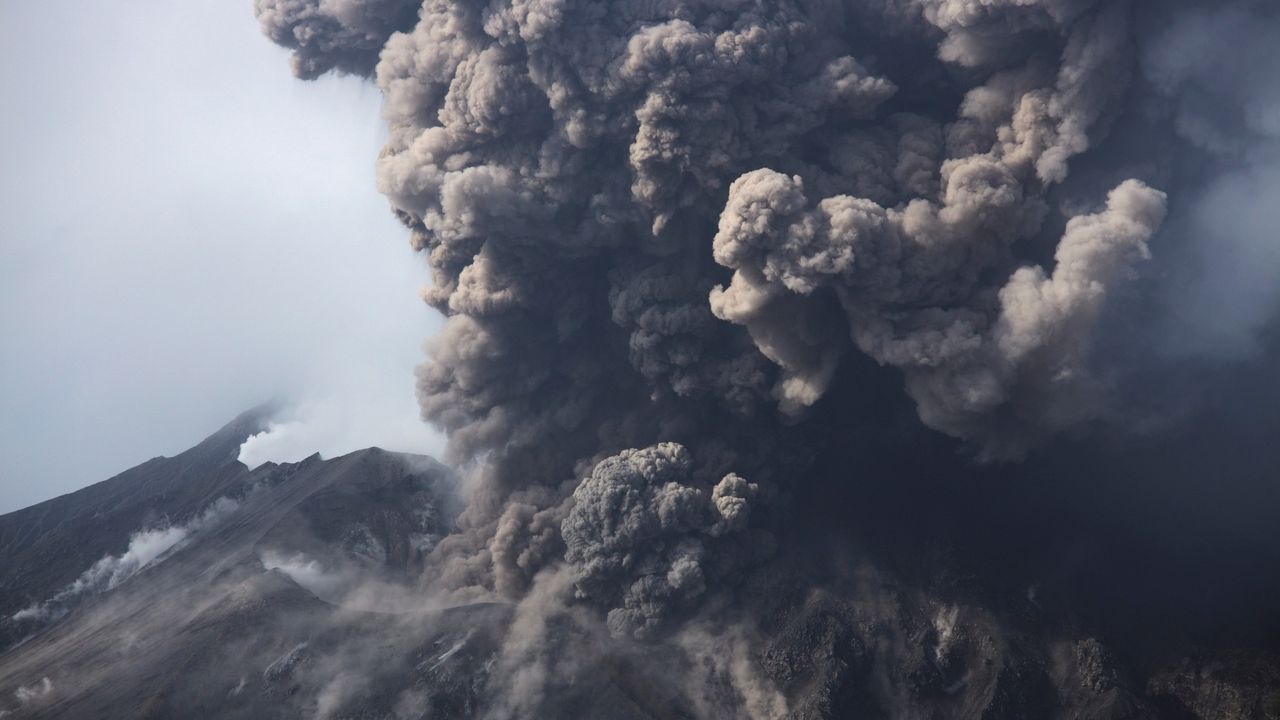
Researchers examining zircon crystals from boreholes 40 miles apart in Norfolk and Lincolnshire found they matched zircon crystals from the Kinnekulle tephra, a volcanic ash layer covering Scandinavia and the Baltic region. The Kinnekulle tephra was formed during the Ordovician period (488.3 million to 443.7 million years ago), and the analysis, published April 29 in the Geological Society of America Bulletin, shows the eruption was large enough to send ash across the Tornquist Sea to what is now Scandinavia. The eruption would have produced pyroclastic flows and likely formed ash clouds taller than 25 miles high, comparable in scale to the Oranui event at Taupō in New Zealand over 26,000 years ago. Evidence also indicates an earlier eruption 453.7 million years ago at the same site. The volcano is part of a wider volcanic system active 450 million years ago that includes deposits in Wales and the Lake District.
Context
The discovery reveals volcanic activity in ancient Britain that was previously unknown or poorly understood. Very little material from the eruption survives today due to erosion and burial, making it difficult to precisely calculate eruption volumes from such ancient events. The findings demonstrate how geologists reconstruct prehistoric geological events using chemical analysis of microscopic crystals preserved in rock samples far below the surface. Understanding ancient eruptions of this scale contributes to knowledge of Ordovician-period volcanism and global ash dispersal patterns.
What's disputed
Whether the volcano qualifies as a 'supervolcano.' Michael Poland (Yellowstone Volcano Observatory) and Peter Rowley (University of Bristol) both note the term 'supervolcano' is imprecise and lacks a consistent scientific definition. Volcanologists prefer to classify the eruption as 'ultraplinian'—the most violent eruption type—based on the volume of material ejected (over 240 cubic miles) rather than applying the vague 'supervolcano' label. Poland noted it would be very difficult to calculate the eruption volume given the poor preservation of deposits.