NASA's Nancy Grace Roman Space Telescope launches successfully on SpaceX Falcon Heavy
The flagship observatory lifted off from Kennedy Space Center on August 30 at 7:26 a.m. EDT, beginning a 90-day journey to its operational post at Lagrange Point 2.
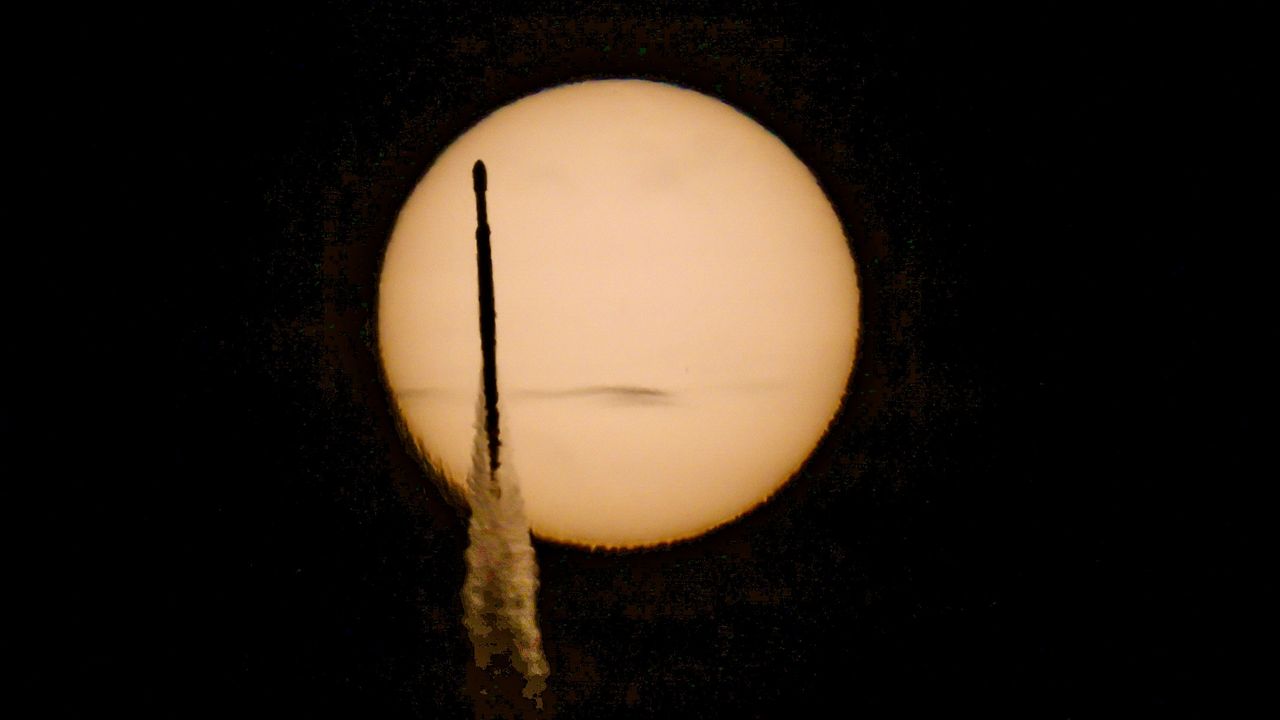
What happened
NASA's Nancy Grace Roman Space Telescope launched successfully aboard a SpaceX Falcon Heavy rocket from Launch Complex-39A at Kennedy Space Center on August 30, 2024, at 7:26 a.m. EDT. The telescope separated from the rocket 31 minutes after liftoff and is now headed toward Lagrange Point 2, approximately 1 million miles from Earth, where it will maintain a stable position on the opposite side of the planet from the sun. The mission represents the culmination of over a decade of development and $4 billion in costs. The telescope will spend roughly the first 40 days of its 90-day journey to L2 turning on instruments and performing status checks, with science commissioning beginning after about 45 days.
Context
Roman is designed to complement existing flagship observatories by surveying extremely wide swaths of the sky rather than focusing on distant objects in detail as Hubble and the James Webb Space Telescope do. Its Wide Field Instrument will capture images 100 times wider than Hubble's, producing billion-pixel images; the largest surveys will generate a trillion pixels and over a terabyte of data daily. The telescope carries the first active coronagraph deployed in space, enabling direct imaging of exoplanets by blocking starlight. Roman will conduct a survey of the Milky Way expected to catalog 20 billion stars—the largest astronomical catalog ever produced—and will support research into dark matter, dark energy, and the search for exoplanets in systems analogous to our own. First science images are expected in early 2027. The telescope is named after Nancy Grace Roman, NASA's first chief astronomer and the first woman in an executive leadership role at the agency, who championed the Hubble Space Telescope before her death in 2018.