At Manzanar, restored WWII baseball field becomes platform for comparing Japanese American internment to contemporary detention
Performance artist Dan Kwong staged baseball games at the California internment camp where his family was held, drawing parallels between 1940s incarceration and current federal immigration enforcement.
What happened
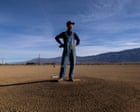
Dan Kwong, a 71-year-old Los Angeles performance artist, orchestrated the restoration of a baseball field at Manzanar, the World War II concentration camp where 120,000 men, women and children were incarcerated following the Japanese attack on Pearl Harbor. After years of fundraising and volunteer work clearing foliage and tumbleweeds, smoothing terrain, excavating outfield posts, and building bleachers and fences—with National Park Service restrictions including offsite parking and shuttle bus requirements, and setbacks including a windstorm that knocked down the fence—he held a public double-header featuring players from California's Japanese American baseball league in 1940s uniforms. Between games, Kwong delivered a speech connecting Trump's "Make America Great Again" movement to the "premise of domination and supremacy" that enabled the internment, while Ann Burroughs, CEO of the Japanese American National Museum, stated that "the racism, xenophobia and cruelty that made what happened here possible are once again unfolding before our eyes." The event included symbolic staging of families' arrival with suitcases and a performance by civil rights singer Nobuko Miyamoto; attendees included men in their 90s or older who had been imprisoned at Manzanar.
Context
Kwong initially conceived the baseball project as a historical commemoration of how internees used the sport to express loyalty and resist their confinement. The arrival of the second Trump administration—with its detention camps and mass arrests—transformed the project's purpose from living history into what Kwong characterized as "a call to arms," making the parallels between past and present civil liberties violations urgent rather than historical. The field itself carries symbolic weight: baseball was documented as both distraction and quiet resistance during the original internment, and its restoration creates a physical space where descendants and survivors can viscerally experience the camp's conditions. The explicit linking of 1940s Japanese American incarceration to contemporary federal enforcement of immigration and detention policy frames the historical grievance as cyclical and potentially instructive for understanding current government actions.