Japan's MMX mission launches to return first samples from Mars moon system
Japan's Martian Moons eXploration spacecraft is scheduled to launch October 19, aiming to become the first mission to return samples from Mars orbit to Earth.
What happened
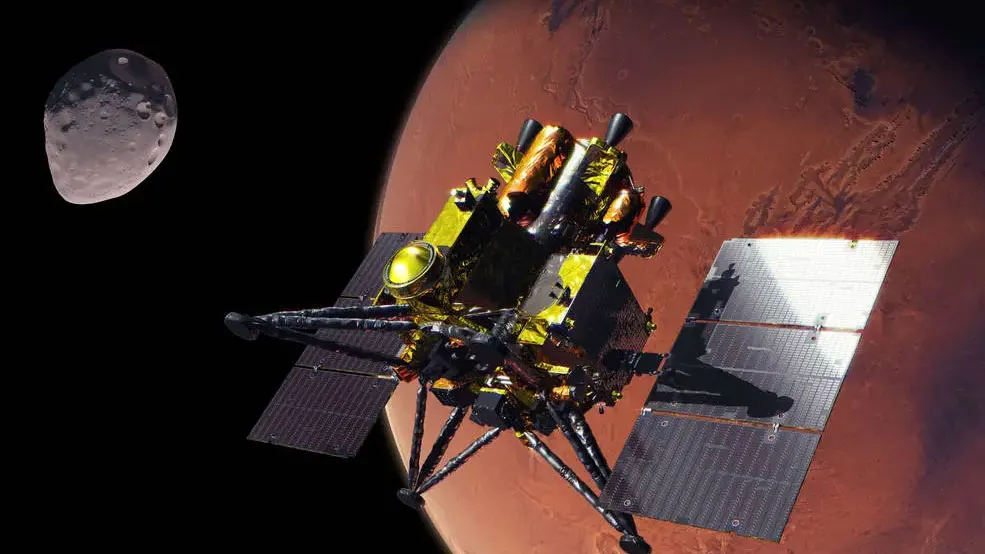
Japan's MMX spacecraft is set to launch on an H3 rocket from Tanegashima Space Center on October 19, 2024, on a mission to study Mars' moons Phobos and Deimos. The mission will reach Mars orbit in August 2027 and spend approximately three years observing Phobos, including deploying the IDEFIX rover and conducting two sample collection landings using the Corer Sampling Mechanism and Pneumatic Sampling Mechanism to extract at least 10 grams of material. After sample collection, MMX will perform flybys of Deimos before departing Mars in November 2030 for an eight-month return journey, with the sample-return capsule scheduled to land in Australia in 2031. The spacecraft comprises three main modules built by Mitsubishi Electric, with the French space agency CNES and Germany's DLR jointly developing IDEFIX and France contributing the MIRS instrument, carrying multiple scientific instruments including spectrometers, cameras, altimeters, and radiation monitors.
Context
Successfully returning the first samples from the Mars system would make MMX one of the most ambitious missions in spaceflight history and represent a first for any spacecraft returning from Mars orbit. The samples and data collected could illuminate the composition, geography, and origin of the Martian moons, with implications for understanding solar system formation. The mission involves international collaboration with French and German space agencies contributing key instruments and the rover, with sample analysis planned by Japan and its mission partners following the 2031 return.
What's disputed
The source notes there are two leading theories for Phobos and Deimos' origins but does not detail what those theories are or where disagreement lies among scientists.