Medieval Experts Argue Voynich Manuscript Was Bound Out of Order, Potentially Advancing Decipherment
A new linguistic analysis suggests the 15th-century undeciphered Voynich manuscript had its pages incorrectly arranged, a discovery that researchers say removes a major obstacle to understanding the mysterious text.
What happened
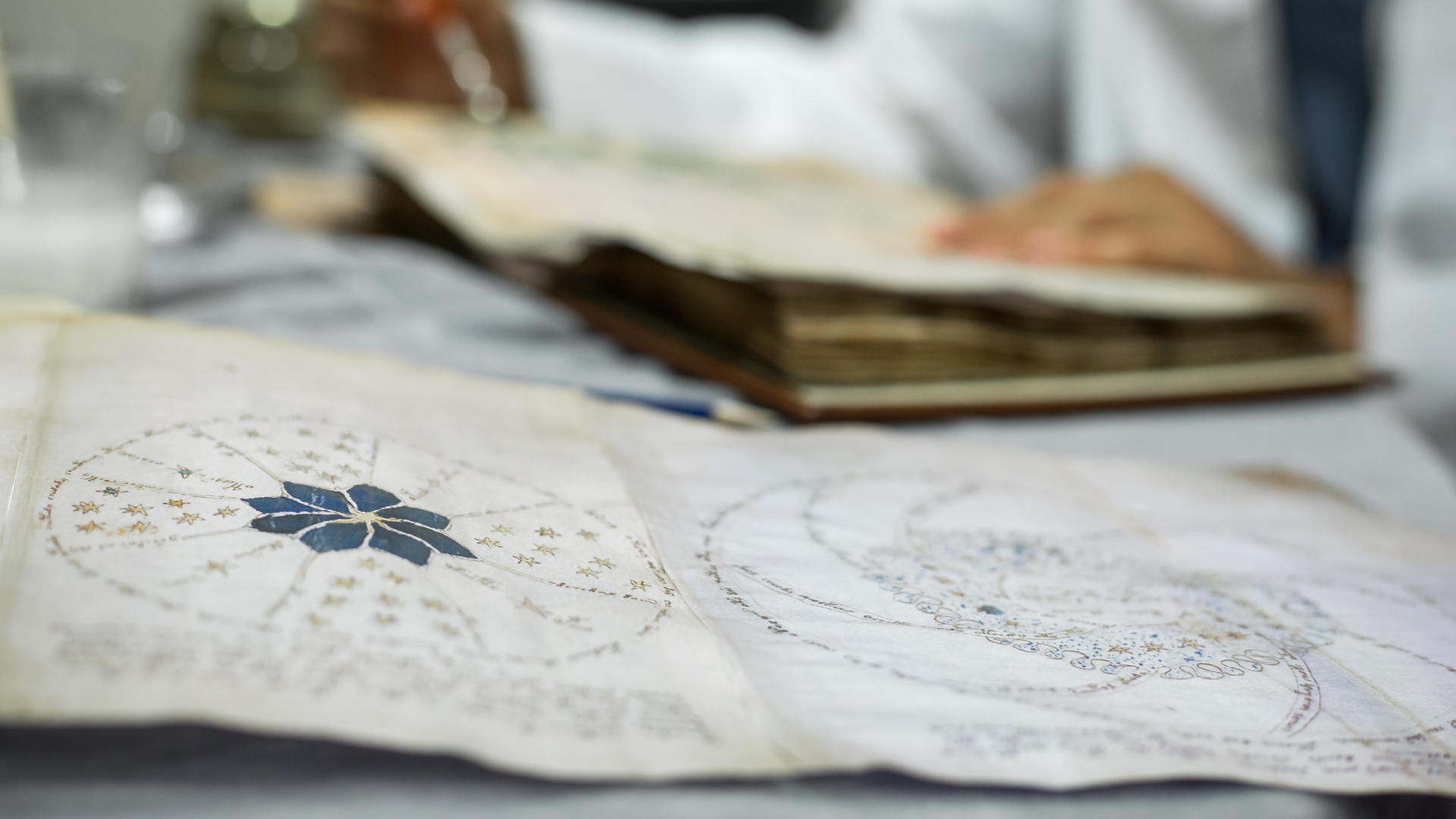
Researchers Lisa Fagin Davis and Colin Layfield published a study in Digital Medievalist (October 19, 2024) arguing that the Voynich manuscript—a 240-page medieval codex written in an unknown script called Voynichese—was incorrectly bound in the 15th century with its pages in the wrong order. Davis observed that the handwriting patterns alternate in nonsensical ways and that some illustrations extend across pages with multiple pages in between. Using latent semantic analysis, a natural language processing technique, Layfield examined the similarity of text blocks across pages and found low similarity between some sections and high similarity between others, supporting the hypothesis that pages were misarranged. The researchers note that a water stain in the upper margins is asymmetrical across pages, which should be symmetrical if the binding were correct. Davis and Layfield suggested that the Voynich manuscript was intended to be a stack of singulions — a series of loose bifolia never meant to be bound together as a quire or a book.
Context
The Voynich manuscript has resisted decipherment for over a century despite efforts by code-breakers, linguists, and medieval scholars. If the manuscript is indeed bound incorrectly, this explains longstanding puzzles about its physical structure and suggests previous scholarly attempts to interpret it may have been working from an incoherent arrangement. The discovery potentially clears a fundamental obstacle to understanding the text: as Davis states, you cannot make sense of a book where all pages are mixed up. The researchers are now considering methods to use the water stain patterns to help reorder the pages correctly, which they suggest could bring researchers closer to determining whether the manuscript contains actual meaning or is a code of some kind.