BepiColombo Mission Nears Mercury After 8-Year Journey, Two Probes Set to Begin Science Operations
The ESA-JAXA joint mission will deploy two separate spacecraft to study Mercury's surface, atmosphere, and magnetosphere starting in April 2027.
What happened
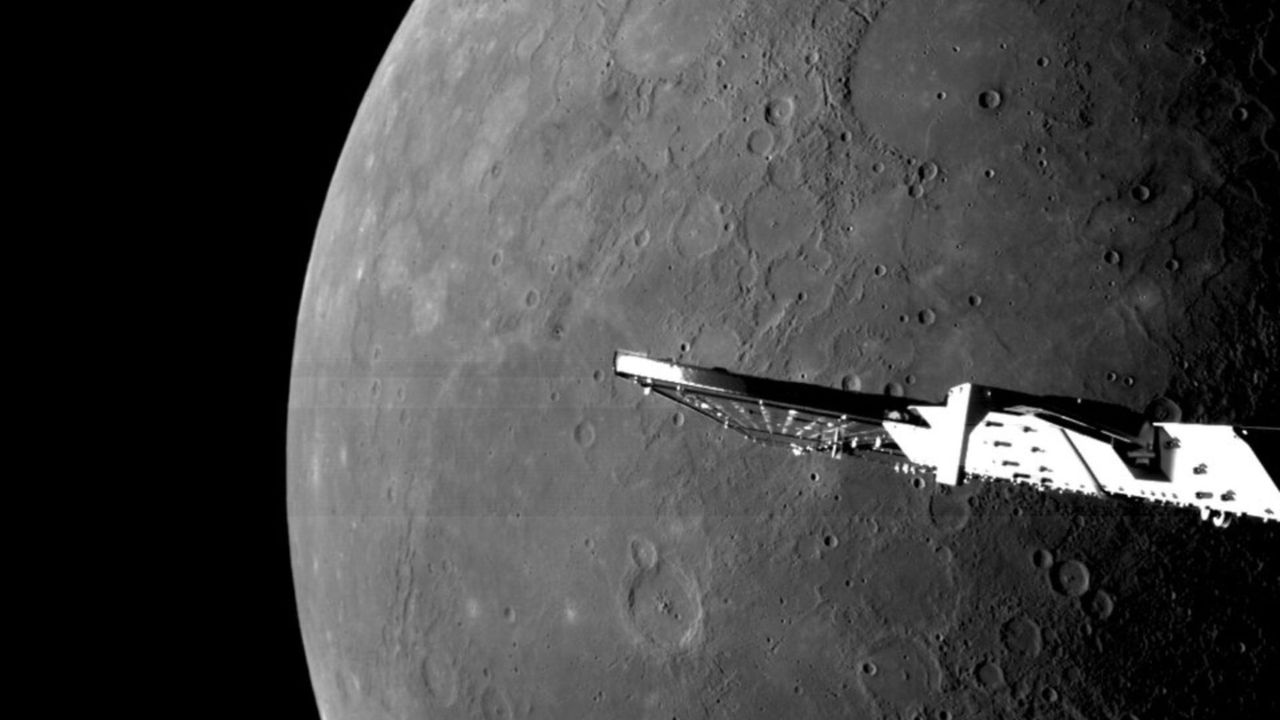
The BepiColombo mission, launched jointly by the European Space Agency and Japan Aerospace Exploration Agency in October 2018, is approaching a critical separation maneuver on September 3 to deploy its two science spacecraft near Mercury. The European Mercury Planetary Orbiter (MPO) will focus on mapping terrain, minerals, gravity, and surface features, while Japan's Mercury Magnetospheric Orbiter (Mio) will study the planet's magnetosphere, atmosphere, and surrounding dust. Separation of the two probes is expected in December, after which most of the mission's 11 combined science instruments will begin comprehensive observations. By April 2027, both spacecraft should be in orbit and gathering coordinated data about Mercury, the least-explored inner solar system planet visited by only two previous missions.
Context
Mercury remains enigmatic despite two prior missions. NASA's Mariner 10 (1974–1975) provided only brief flybys, and NASA's MESSENGER (2011–2015) mapped the complete surface but operated with limitations: its technique for detecting surface elements relied on iron-rich rocks, which Mercury lacks, and orbital constraints left the southern hemisphere poorly observed. Mysteries persist about Mercury's formation, the nature of bright surface pits called 'hollows,' the prevalence of volatile elements compared to Earth, and the magnetic field's unusual offset from the planet's core. BepiColombo's two-spacecraft approach and advanced instruments capable of reading non-iron-rich rocks offer the first opportunity to address these gaps systematically, particularly through high-resolution views of the southern hemisphere and searches for water ice in permanently shadowed craters. Scientists emphasize that BepiColombo's orbital phase represents a qualitative leap from the flyby and limited-orbit data previously available.