German startup Isar Aerospace launches Europe's first fully commercial orbital rocket
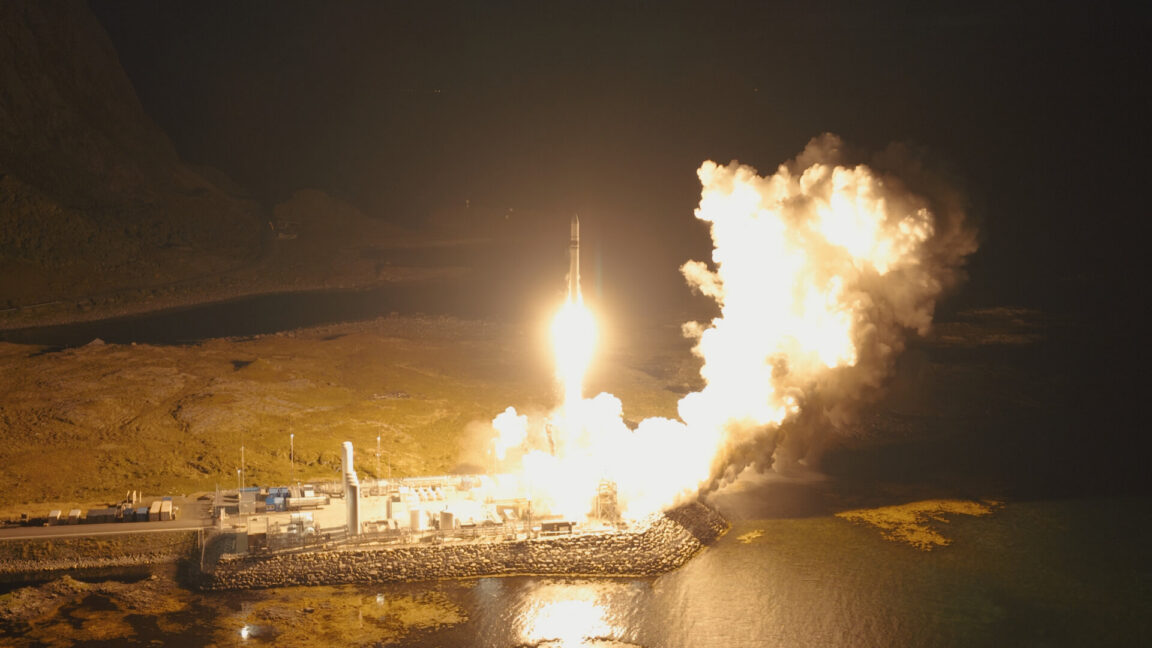
The two-stage Spectrum rocket reached low-Earth orbit Saturday from a Norwegian Arctic spaceport, marking the first European privately-developed vehicle to achieve orbit.
What happened
Isar Aerospace, founded in 2018 by three Technical University of Munich students, successfully launched its Spectrum rocket from Andøya Spaceport in northern Norway on Saturday at 20:12 UTC, reaching orbit within seven minutes. The 28-meter two-stage vehicle became the first fully commercial launch vehicle developed in Europe to reach orbit. Isar raised approximately $1 billion across private funding rounds and now employs nearly 500 people, making it the most well-capitalized private launch company in Europe. CEO Daniel Metzler noted the company achieved in eight years what had taken the European space industry decades, and that the rocket was the first built predominantly in Germany to reach orbit.
Context
Isar's launch provides Europe's space industry with a domestically-developed alternative to incumbent providers Arianespace and Avio, whose Ariane 6 and Vega-C rockets have relied on billions of euros in government funding and are only marginally competitive even with government assistance. The success addresses a broader strategic concern for European officials: the continent's space industry traditionally depends on government procurement models and has struggled to attract venture capital compared to U.S. competitors, creating a geopolitical vulnerability as European governments currently must either pay a premium for European launches or use SpaceX at lower cost but reduced political autonomy. Isar's privately-funded model and rapid development timetable represent a departure from Europe's legacy aerospace architecture and signal potential for competitive pressure on the continent's established launch providers. The achievement holds particular salience amid European concerns about strategic independence and reduced dependence on U.S. space capabilities.